My grandpa farmed. He was fit until his last days.
If my grandma was a top-notch artisan, my grandpa was a jack of all trades. He could build houses, make furniture, fix roofs, shape apricot trees—it was similar to the bonsai art, just ten times bigger. Among all the things he did, I loved seeing him practice traditional medicine the most. He collected herbs from everywhere—leaves, roots, bark—anything nature offered to reduce pain.
I often followed him to the Red Cross Association in town, where he donated those remedies. On the way back, if luck was on my side, he would buy me sweets or a comic book. He was also the one who bought me my first doll and my first model toy car.
Long before the internet invented nicknames for loved ones, my grandpa was already ahead of his time. He called me ‘Gấu’—Bear.
Whenever I played in the yard and heard him call out from the background,
“Lại đây hun ông ngoại cái coi, Gấu!” (Come here and give grandpa a kiss, Bear!)
I vanished.
Instantly.
As if I possessed actual magic.
He never gave up.
Next time, same invitation.
He carried me on his shoulders. Paddled me down rivers. Let the world slow to the sound of water.
That’s where my calm began—not from meditation, but from sitting on a bony man’s shoulders while he sang badly.
I loved sneaking into his hut and stealing his coconut candies and biscuits. People say food taken this way always tasted better. It was true. And he always knew I was the culprit because, who else? Next time, he hid things at a different place, and I would still find them. This was like our hide and seek game and I missed it so much. Now, he is hidden in a place I clearly know but can never find.
The most valuable object in his life was his radio. That’s how he stayed connected to the world.
Surprised?
Every day, he hosted what I can only describe as a round-table discussion—neighbors, relatives, whoever passed by—debating politics, history, soccer, and whatever news the radio delivered that morning.
My grandma hated it.
“If he’s so smart,” she complained, “why doesn’t he solve the family’s problems first?”
It didn’t shake him.
The discussions grew bigger.
So did my grandma’s complaints.
Unlike my grandma, who barely glanced at my certificates, my grandpa read everything.
Every line. Every stamp. He said nothing to me.
But the next day, at his round-table discussion, the opening topic wasn’t world affairs.
It was my achievement.
By evening, the entire village knew.
Most of the time, my grandpa worked alone because according to him, it was faster. He didn’t like help. But he taught me small things—how to hold tools, how to fix loose boards, how to cut wood. I loved working with him.
There was no pressure for perfection. I could play with his tools. Or simply be there. Being his companion was enough.
People joke that in Vietnam we only have two seasons: the hot season and the rainy season.
But in my hometown, where we lived close to the river, we had a third one.
The flood.
It came to visit us once a year.
As a child, I loved it. Flood meant sampans instead of roads, water up to the knees, and the morning ritual of shoe-hunting—because the river always borrowed them overnight and returned them somewhere else.
We treated floods the way you treat inevitability: you prepare, you adapt, you don’t complain too much.
That was life. Our life.
One year, during flood season, I got sick—really sick. Burning with fever in the middle of the night. My family rarely trusted hospitals. But this time, even my grandparents knew we needed help from people in white coats.
The nearest medical facility was about forty-five minutes away by foot. In normal weather.
That night, my grandpa didn’t hesitate. He lifted me into his arms and ran—barefoot—through dark water and rising currents.
I was unconscious.
But the strange, beautiful thing about the body is this:
it often knows before the mind does.
Even though I saw nothing but darkness, even though I felt the push of water against his legs, I felt safe. Completely safe.
I knew—without thinking—that I would survive.
I recognized that same feeling years later, when a stranger carried me to the hospital after I was hit by a motorbike—an accident that gifted me twenty stitches on my forehead and a brief resemblance to Harry Potter.
But that night, in the flood, when my grandpa carried me through darkness and water, was when I met the best marathon runner in the world.
Not on a track. Not in daylight. But in floodwater, carrying love instead of a finish-line number.
Love made him strong.
Love made him fast.
Love made him run.
My grandpa didn’t accept love easily. He questioned everything.
In the family, he was famous for returning gifts. Relatives or the children of my aunts, who didn’t live with us, would visit with tea or biscuits—a common sign of respect in our culture.
He rarely accepted them.
“They’re bribing me,” he would say. “Their mother hasn’t visited me in years, and suddenly their kids bring biscuits and tea?”
To him, respect was not equal to tea…
Or biscuits.
Or money.
But somehow… he always accepted what I gave him.
No hesitation.
No suspicion.
Even though my mother and he were mostly distant…on and off. Mostly off.
With me, love didn’t need proof.
It just arrived.
If these stories resonate with you and you’d like to read the book when it’s finished, you can leave your contact here. I’ll send it to you when it’s ready.
If you resonated with the first two unedited chapters I shared, here is Chapter 8. Writing this one brought a lot back… and it was a beautiful feeling writing it.
It’s tender, honest, and one of my favorite chapters in the book.
Notes: I wanted to add more pauses and white space, but WordPress doesn’t quite allow it here (or show it the way I want). My editing principle is something I call Structured Chaos (inspired by my life, of course 😜). The book will show this much better than this page can.
If you know a way to add visible empty lines or spacing in WordPress, let me know. Thank you 💗
For now, enjoy!
CHAPTER 8: The First Window
Up until this point, you might think you understand that place where I grew up. But there is one thing I haven’t told you yet.
At night, my world disappeared.
Not metaphorically.
Literally.
No streetlights.
No shop signs.
No glow leaking from anywhere.
When the sun went down, the land returned to its original state—fields, water, trees, houses—all swallowed into one vast, unlit silence. Darkness wasn’t something that arrived. It was something that took over. The sound of nature—frogs, toads, chameleons—amplified that endless space.
But because of that darkness, I saw the stars better than any city child ever could. The stars were not decorative. They were overwhelming. The sky didn’t just sparkle—it expanded. It pressed down on us, enormous and unowned.
I didn’t brush my teeth in the bathroom. I was always with my toothbrush, sitting in front of our house, close to the big vases that contained rainwater (which was also our drinking water), and brushing my teeth under the stars.
Back then, the sky was free.
Its beauty cost nothing.
More than twenty years later, I would spend thousands of dollars traveling across continents just to look at the Milky Way again—only to realize I had already lived that luxury for free.
My childhood was expensive.
It was astronomically rich.
Thatched-roof houses made of wood and coconut leaves. Roofs breathed with the wind. The ground was uneven, familiar under bare feet. And at night, there was no softening the truth of where we lived. The dark did not pretend to be kind.
But every evening, at the exact same time, something impossible appeared.
A single square of light.
Not a star.
Not the moon.
A window.
One neighbor, one house, one rectangle of light floating inside the night.
Inside that window lived something magical:
a television.
That window was not entertainment. It was orientation.
My family didn’t have a television—we were all dreaming of having one, but it simply wasn’t possible. The cost of the television alone was a lot, not to mention that we had to ‘save electricity.’ We only used it for essential work, and there was a ‘manual’ on when we should turn a light on and when we should all turn it off and go to bed.
So the only way to watch anything was to walk through the dark to someone else’s house, stand quietly outside their window, and hope they didn’t mind being the unofficial movie theater of the neighborhood.
I was around five. My aunts were barely adults.
We were all poor, all hopeful, all curious, and that window was our shared escape.
I would run there barefoot, rain or no rain, darkness or no darkness.
My aunts followed behind, laughing, gossiping, whispering, “Nhanh lên, Nghĩa!” (Hurry up, Nghĩa!). Nghĩa was the boy’s name they called me at home; a name my grandma chose to confuse bad spirits and keep me safe, a small superstition stitched unquestioningly into my childhood.
That little window was the brightest thing in our lives.
The neighbors knew people gathered outside to watch.
They never closed the curtains.
They never pushed us away.
Their generosity was effortless—the kind that didn’t need words:
They simply left the window open.
And every night, we stood there—a tiny audience in the shadows—watching whatever happened to be on: dramas, cartoons, the seven o’clock news, shows I didn’t understand but stared at with the kind of focus only children possess.
No chairs.
No popcorn.
No subtitles.
Just the glow of someone else’s world touching our faces.
And without realizing it, I learned my first lesson about generosity:
When the world is dark, you move toward the light—even if it comes from a place that isn’t yours.
No one taught me that. My little body just… knew.
This ritual—these nights spent at a stranger’s window—became the earliest blueprint of who I would become:
A girl who trusts that there is always light somewhere.
A girl who isn’t afraid to walk toward generosity.
A girl who believes warmth can come from unexpected places.
A girl who shows up, again and again, even if the path is muddy and the night is cold.
Years later, when we finally got our first black-and-white television, we were still occasionally talking about those nights watching movies for free. Somehow, it became more complicated once we had our own than when we just spontaneously appeared at someone’s home and went with the flow. We didn’t have to fight over which channel we should watch or who got the right to decide it. Freedom came with some cost, too.
And also years later, when heartbreak took over, when grief hollowed me out, when I lost my mother and myself in the same year, I finally understood:
Everything I became began with that window.
Because it taught me the simplest, most powerful truth:
The light you run toward as a child becomes the courage you carry as an adult.
And in many ways, this book is me running toward that window one last time—to tell you where my journey started and to invite you to remember the first window that lit up your life, too.
——
If these stories resonate with you and you’d like to read the book when it’s finished, you can leave your contact here. I’ll send it to you when it’s ready.
…and I am happily peacefully and dangerously writing a book now 🙂 Start Date: Oct 1991 – Present This is what it’s about…
To the people who have known me and secretly wondered, “Why is she like that?” — this is the long, honest answer.
And to the people who haven’t met me yet: this is really about YOU.
Because the question behind every life is the same — “Why am I like this?
A Sneak Peek
I’m currently editing the book and working on the illustrations. It will likely take another two months before it’s ready.
If you’re curious, I’m sharing the first two chapters below—unedited, as they are.
——
Oct 7th, 1991
I was born at home – my grandparents’ home
PART I – THE FOUNDATIONS
BEFORE I KNEW MYSELF
Where the nervous system learned its first language
and just like that… it started
CHAPTER 1: The Kid Who Accidentally Managed the Whole Family
CHAPTER 1
The Kid Who Accidentally Managed the Whole Family
I grew up in a family where the biggest luxury wasn’t money, it was space.
Not emotional space (absolutely none of that),
Not personal space (nonexistent), but literal, physical square meters.
We were poor, but we had three houses:
Grandma’s house: a tiny wooden kingdom where she ruled with perfectionism and grass threads, weaving sleeping mats from strands so fine they felt like the delicate strength of a woman who had survived too much, and kept going anyway.
Grandpa’s house: twenty meters away, his personal “I’m done with your grandma” sanctuary.
The middle house: where my aunts, my uncle, and I all lived like one noisy ecosystem.
Three houses, but if someone coughed in one, the other two heard it.
Walls were made of wood, water-coconut leaves, and hope.
Doors had no locks, or more precisely, the kind of primitive locks that screamed, “Hey, look! This is locked and don’t try to break in, but if you try… a little, you may succeed.” Security was organized like that because life was simple. Most importantly, there was nothing worth stealing.
The simplicity of the outside world, however, didn’t extend indoors: complexity took charge. In my child’s logic, I hadn’t understood why my family argued all the time. Everyone seemed to be busy enough with their work, and instead of resting at the end of the day, they came home and started complaining.
My aunts complained about each other.
My uncle complained about my grandma.
Grandpa complained about my uncle.
My grandma complained about all of them.
And my…
Actually, let’s just say: If quantum physics ever needed a model of infinite permutations, they could study my family arguments.
But one thing never changed:
No one ever shouted at me. They only came to me to share.
I remember before I was taught how to read, I would hold a book and read out loud as if I understood everything. My aunt would sit there with me, trusting in my ability to understand adults’ problems, and she would start to tell me all sorts of stories. Or when my uncle saw me swinging the hammock with a piece of old newspaper in my hands, he would proudly tell my aunts, “Look at her, she could read already,” while knowing clearly that I was speaking… gibberish.
I was the safe zone of the family.
The emotional Switzerland.
The tiny Buddha without the wisdom.
The kid who didn’t know she was keeping the family together… simply by listening.
Back then? When my little family was the only baseline I had, I thought it was normal. Well, I actually had another family—my neighbors across the river—to compare. Their circumstances seemed even more complicated, which made my family not an outlier at all.
Now, after leaving that river, those houses, after seeing other homes and listening to other stories, I began to notice something interesting about family dynamics: People in different places, speaking different languages, were facing similar struggles and tension, with the same people holding more than they were named for and going through the same family negotiations.
But back then? I was the happiest kid running between these houses… completely unaware that I had already become the family mediator, the emotional courier, the unofficial United Nations peacekeeper.
Now I see it clearly: I wasn’t just a kid running between houses.
I was the bridge between people who loved each other, feared each other, misunderstood each other, and couldn’t say “I’m sorry” even if their life depended on it.
Did you recognize yourself here, or does your family have someone like this? The one who absorbs the chaos and turns it into connection.
The stabilizer.
The listener.
The soft landing.
The translator of feelings adults don’t know how to express.
Some families call them ‘the responsible one.’
Some call them ‘the old soul.’
Some don’t even notice them at all.
If you were the child who kept the peace, you were never weak.
You were never too emotional.
You were never ‘mature for your age.’
You were the emotional architect of a home that didn’t know how to hold itself together.
And that is a gift.
One you learned too early, but one that now, finally, belongs to you.
I thought I was just a kid running between three small houses.
But I was actually carrying an entire family across the distance between their hearts.
CHAPTER 2
Grandma—The Original Perfectionist
(Who unintentionally trained another one)
My grandma ran a handmade workshop—the best in town.
She was a perfectionist long before the word ever trended on social media. She made sleeping mats from grass threads. And shopping bags, too—the same kind of bags you now see repurposed in luxury boutiques and tropical hotels. Our sleeping mat had magic: it could regulate the temperature, making the cold season warmer and the summer days cooler.
We had good products, but I didn’t feel proud or appreciate the kind of magic our work could bring to people when they sleep. The motto of ‘Love what you do, good things will come,’ didn’t exist yet in my little brain. All I saw was hardship and back pain.
I often think: if someone had discovered her talent at the right time, we might have been famous. Or at least… less poor.
My grandma couldn’t read.
She couldn’t write either—not entirely true as she could remember how to write her name to sign off important papers.
But she was sharp.
She never missed a deadline.
If someone ordered something, she remembered every detail and delivered it exactly on the day she promised.
Never late. Not once.
We built our reputation on quality and on my grandma.
Her amazing memory was my enemy.
As a kid, I wanted to buy stuff adults thought ‘unnecessary.’ One of the things I always dreamed of was a pencil case—the kind that had a magnet and several compartments. So, I sneakily waited until she was cooking in the kitchen and I reached the pocket of her Áo Bà Ba and stole 500 đồng (less than 2 cents in today’s exchange rate). I needed to do it a few times to collect enough for that pencil case. When I finally got the lovely red pencil case, without investigation, the ‘culprit’ of the family was quickly identified, and a court was set up: she told me exactly how much was missing. That was my first and last Mission Impossible.
To this day, I still wonder why she didn’t get me after my first attempt.
She was also an excellent investor.
Whenever she saved enough money for a small gold ring, she rushed to the market and bought one. Gold didn’t lose value. Gold was safety.
Sometimes, it was hard to spot patterns with my grandma. On the surface, she seemed like a risk-averse person. But she wasn’t just like that. She was part of the Chơi Hụi network—an extremely complex saving and credit system that existed in many rural parts of Vietnam. What she did was to send money every month to the group’s manager’ and the manager would lend that money out to other people and charge them a certain interest. If my grandma kept sending in money without withdrawing, then depending on the agreement, after six months or one year or more, she could get back all her money with some… add-on. That is the simplest way of explaining it, but you get the gist.
The riskiest part of that kind of investment was: If one day the manager decided to take all the money and move somewhere else, you basically lost everything. No legal agreement. No written record. A completely trust-based system.
And my grandma’s ‘wealth managers’ never fled. All her investments came back safely through that risky network. I never knew if it was a skill she had—reading people and trusting the right ones—or simply that luck was on our side. When life was difficult, hard work and hope sprinkled with a bit of risk-taking were a very promising combination, and it often paid off.
She did all of this because she had a dream. Her dream was simple: to build a brick house. That dream came true when I was around thirteen. If it hadn’t been for my school fees and extra classes, it might have happened earlier.
But I know—deep down—my little certificates built her several brick houses or maybe castles in her heart. I was trying to build a whole dynasty for her.
Making mats was slow, precise work. Every single thread had to be inspected and matched in size so the final pattern would look neat and even. Before the threads were ready for production, they had to be dried in the sun, and taking care of them was a fun thing. I was sometimes assigned as a weather forecaster and that meant looking at the sky and spotting dark clouds in the distance. But not all dark clouds would turn into rain, so I had to be careful before announcing the upcoming rain, because people had to stop their work, collect all the thread bundles, and hurry inside. A drop of rain touched the threads? Mold would develop and the color would no longer be beautiful.
That was a very important task during the rainy season. I enjoyed that part more than making the mat.
One sleeping mat—160 by 200 centimeters—took an entire day. From five or six in the morning until eight or nine at night.
My grandma and my aunt Ten were the master artisans.
And me?
I was the grumpy assistant.
I started helping when I was seven or eight.
And yes—that’s exactly where my eye for detail comes from.
‘Hate’ is a strong word.
But I definitely used it for her workshop. Who would want to sit on the floor in a very uncomfortable position and weave hundreds of threads together by hand? There was no loom for this kind of handicraft. Our fingers were heddles and our legs were beams. You would sit on the floor and use all of your limbs for it. As a kid, I obviously wanted to run around rather than become a loom.
Whenever she asked me to help, I lied:
“Con có bài tập về nhà.” (I have a lot of homework today.)
She always knew I was lying.
Always.
But because it involved ‘studying,’ she let the lie live.
That was her love language: strictness paired with silent permission.
She complained constantly that girls didn’t need too much education.
“You’ll grow up, get married, and leave. Why study so much?”
She would say that in the morning.
At night, she would add:
“If you don’t get good grades, I’ll send you to the market to sell lottery tickets. So study well.”
Contradictions were her specialty.
When I was seven, she sent me to a Temple—Tian Hou Temple—to learn Chinese. She didn’t wake up one day and decide that. It was my grandpa’s idea. One afternoon, he saw me writing Chinese. As with most of the things I did when I was a kid, I didn’t know what I was doing—still, I did it with absolute confidence. I wrote every Chinese character I saw on our ancestors’ altar. The confidence and the concentration I had sparked ideas in my grandpa. I didn’t know what he told my grandma but one day, I was brought there for my very first foreign language class.
The same woman who said we couldn’t afford my education was also the one paying my tuition. Every time I announced it was time to pay the fee, she would sigh:
“Learning Vietnamese is enough. Why Chinese? Only one more month, okay?”
And just like that, I continued until I was fifteen.
I earned my Chinese certificate Level C (Advanced Level).
Chinese classes started at six in the evening.
I walked to the temple at five.
When lessons ended two hours later, I stood at the gate and waited.
There were no streetlights back then. My grandma would come with an oil lamp or sometimes with a fancy flashlight if my uncle didn’t take it for his nightly fishing trip. I followed her small silhouette home in silence.
Love was warm just like the light shining around her. That’s how I never missed a lesson.
She was funny, too—in her own way.
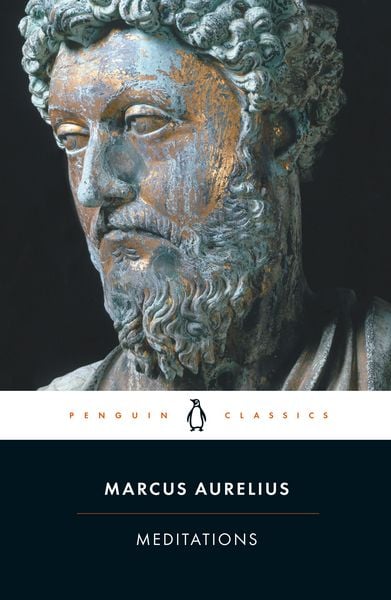
She was everything to me: my mother, my teacher, my Marcus Aurelius, my dentist, my doctor.
I rarely went to hospitals. She diagnosed everything herself and always knew exactly what herb, oil, or remedy to find. She didn’t believe in Western medicine—according to her, anything not from nature is dangerous to health. “These modern medicines are all chemicals. Not working.” She confidently concluded.
Once, I had a severe seafood allergy. I had a memorable dinner with clams and I loved them. We didn’t have that often—that night, the boyfriend of my Aunt Ten, who later became my uncle-in-law, wanted to impress his future in-laws and the-one-and-only kid of the family, who had the utmost power to decide whether he would be accepted or not. So, he kept feeding me and I kept eating. Quietly—I approved the clams and I approved my ‘uncle-in-law.’
Nothing happened until midnight. I woke up feeling dizzy. I drank water nonstop and swelled up so much I nearly doubled in size. All night, my grandma sat beside me, fanning me, giving me water. She was so calm as if she had experienced this several times before. So, as usual, I trusted her, and she patted my back slowly until I fell asleep again. We slept on the floor— the softest thing I felt was her hands.
Moments like that get recorded by the body immediately.
Later in life, your body recognizes this kind of love again—and it also recognizes the absence of it.
By morning, I was fine.
My grandma didn’t believe in allergies. No one in our family had them. So she concluded I simply wasn’t resilient enough. She kept feeding me seafood—smaller doses. I kept reacting.
Until one day… I didn’t. Now the only allergy I have is bad food.
She complained a lot.
But she forgave easily.
During the war in the 1960s, a bomb fell on the bunker.
Her kneecap was destroyed. It never healed.
She told me stories about the hospital—how kindly the American nurses treated her, how it was the first time she ever saw canned food.
She didn’t hate them.
She almost never said she loved anyone in my family, all she did was complain about them, expressing how disappointed she was in them. But at night she would stay up late just to wait for my uncle to come home and then she could sleep. She could be sharp with words, but she broke easily inside.
That’s how I learned to question criticism:
Is this about me—or about someone trying to protect themselves?
If anything, my grandma taught me this:
Love doesn’t need to be spoken. It works harder than words.
If these stories resonate with you and you’d like to read the book when it’s finished, you can leave your contact here. I’ll send it to you when it’s ready.
I have seen this photo many times. But only today that I really understand it.
I finally have the courage to run away from everything that makes me miserable and that everything is my thoughts… That one day is today.
Thanks me for realizing this and living this! Still, it needs more than just a little practice 🙂
All the blogs before this one was me trying to do something I believe could make me happy but only today that I am truly happy. Any blogs from today will be unfiltered.
In my last blog “Changes,” I wrote this “When I write another blog, I guess that is when I am already in my new home making my way to a new start, to accomplish more things and write more blogs of course 😀”
I think the situation is exactly like that now.
Well, this might be my last blog of 2023. It’s been more than six months since my last writing. Many times, I wanted to write a blog, but then I did something else instead.
In the past six months, many events happened in my life. I moved to a new apartment, got a new job, and reunited with my mentor after four years. I also traveled to several places for the first time.
However, this blog is about Tejeda. I spent a whole week there, working remotely and exploring the town all by myself. I had always dreamed of going there with a special someone, but life is short… Why wait when you can just do it, right? So, I booked my flights, selected a beautiful accommodation, and went there.
I loved it a lot. It brought back many of my childhood memories. I saw the flowers my grandpa grew when I was little. I walked deep into the fields and listened to the sounds of birds and the singing of the leaves in the trees – maybe they were talking about me 🙂 I smelled the freshness of nature after the rains – it was just like home. Every afternoon, the smell of coconut pastry filled the town with an unforgettable scent. Writing this, I miss it so much. To be honest, I’m not a big fan of that coconut pastry, but living there for one week makes me miss it when I wake up and don’t smell it anymore. But I did start to like it; on my first day, I didn’t like it at all but then I bought it again and again, still not 100% convinced but I think if I lived there for one month, I would like it a lot. Good things take time :)))
I did a small hike to Cruz de Tejeda and spent almost two hours in the rain while doing that. It was a life-changing experience for me because, during that time, I had to deal with a lot of thinking. Reflecting on those thoughts was a life-changing experience. The nature was beautiful and calm. I thought about my grandparents and how lovely my childhood with them was. I pondered on love, the truths of life, and I contemplated myself – how small I was in this big, big world. How much I didn’t know…
My last night in Tejeda was special. My favorite restaurant there was closed, so I ended up making some soup at home. When I cleaned up and took out the trash, my hair was wet as I just took a shower, and it was cold outside. I thought I would run to the trash bins and then back to my apartment immediately. But the night was so calm, and I saw stars. It was so appealing that I decided to take a walk – it was one of the most memorable experiences I’ve ever had in my life. You might think, ‘What’s so special about that?’ – nothing, actually. But because of that, it was special for me. Until now, I also didn’t understand why I didn’t feel cold at all despite the 7-degree weather, wearing just a sweater, and with wet hair. I walked along the street that I strolled everyday, looking at the mountains from afar. And I just walked. Simply like that. No phone, no camera, only me and the night. It was so quiet that I could hear my breath. Maybe because of that, I love the place and that night so much.
I see myself living and working there. But maybe it’s just because of that very moment that I was thinking about it. We’re all vulnerable to beauty.
I wish everyone who reads this blog a beautiful holiday and a happy new year in 2024. This blog provides no tips for traveling and no lessons learned in life, but somehow, I think it’s still beautiful because it’s simple, right? 🙂
Yesterday as I was walking home from my “new home” (yes, I am moving to a new place), I saw a student carrying a big oven and he was out of breath… He stopped, took one deep breath and lifted the oven which was on the ground then tried to run as fast as possible until he was out of breath again… and then he rested for one minute and started the whole process again until he reached home – which is also my current home – a student dorm. I saw myself in him years ago and also now as I am moving things to my new place 😀
“Do you need help?” I asked
“Yes please” He replied in relief.
What a beautiful word “Yes” – I remember when I read the book “The Man Who Wanted To Be Happy” a long time ago, “asking for help” has become my mantra because you never know what people will say until you ask. Same with offering help. I felt so happy when he said Yes, then I could help him.
We brought the oven to his home, he lives on the third floor and me on the fourth.
“Good night,” I said
“Wait a moment please” He ran inside quickly and grabbed a bunch of snacks and gave them to me.
“Thank you.” I smiled and left.
Lately, I go out almost everyday after 6PM to go around Leipzig to pick up things for my new place. The journey is so long that in around 2 weeks I almost finish a thick book just by reading it to kill time whenever I am on a tram or a bus.
Since I arrived in Germany, probably this is the first time that I encounter such a big change and have to deal with problems almost by myself. I usually do things by myself but this time I feel like “more by myself” (hahaha if that makes sense) which is a good thing by the way. It helps me appreciate more the help I get from others.
Sometimes I ask myself which would make me feel happier: when someone helps me and I say accept the help OR when I offer help and they say yes to me. Maybe they are equally beautiful 😛
Yesterday I learned again the practice of being thankful for what I have. If I think carefully, actually I do not have to worry much about things in my life at the moment. My mentor always tells me to remember to have fun in life and I just forget it once in a while. If I only focus on the problems, I will always be unsatisfied. And my vision in life is blocked by the problem. But if I look at the whole picture, I can be more visionary. And yes, when I do that, things seem to go on the right path: I really enjoyed my two years of doing Master’s in Germany – everything happened just as planned, I got graduated on time, and along the way, I had lovely travel experiences and working experiences, also my German has improved a lot (so gut bin ich aber nicht :P), then I got the new apartment in a very rare situation, almost unbelievable to many. The only thing left is a full-time job – which I have to admit that it’s pretty stressful to think about 😀 Buuuuut it is not worth it to sabotage all the good things and focus only on one stressful situation right? I have so many things to be grateful for and to appreciate.
Yesterday I received a message “love you” from my mentor and I just felt so happy. Simple words are just powerful. They do give me the energy to complete more things in life, knowing that I have someone there for me is a huge privilege. Then another friend sent me photos from Santa Fe. Having people remember you everyday and want to share with you their daily moments is just beautiful.
When I write another blog, I guess that is when I am already in my new home making my way to a new start, to accomplish more things and write more blogs of course 😀
Changes are scary sometimes but they are materials of life and what make you who you are.
Dieser Morgen ist für mich ein besonderer Morgen, weil ich um 7 Uhr aufgestanden bin. Ich bin schon lang nicht mehr so früh aufgestanden. Um 7 Uhr klingelte der Wecker, aber ich blieb noch im Bett und ich versuche mich, noch ein paar Minuten unten den warmen Decke zu verstecken. Die erste Frage, die mir ins Gehirn kam, war, wer so früh ein ständiges Geräusch machte. Ich versuchte, den Rhythmus einzufangen und festzustellen, was oben oder unten passieren könnte. Die Geräusch hörten sich so an, als jemand Basketball üben würde, aber warte mal…ich dachte: “Es ist unmöglich und unverantwortlich, in der Wohnung zu spielen, besonders in einem Studentenwohnheim und um 7 Uhr morgens, nicht wahr?” Aber ich musste mich für dieses Geräusch bedanken, das mich ermutigte, aus dem Bett aufzustehen.
Es verlangte mich nach einem Glas von Orangensaft. Es war seltsam, aber ja, ich konnte mir sogar vorstellen, wie es schmecken würde und wie erfrischend es wäre. Zum Gluck hatte ich Orangen zu Hause, also machte ich den Saft nach dem Duschen. Weißt Du warum ich so früh aufstehen musste? Weil ich dieses Schreiben verfassen muss. Heute ist der Einsendeschluss. Letzte Nacht war mein Kopf leer und ich hatte kein Thema, über das ich hätte schreiben können. Dies geschah schon einmal, also dachte ich mir, ich würde die Sätze einfach mit den neuen Wörtern bilden, die ich gelernt hatte. Ich habe vielen davon. Der Prozess des Deutschlernens ist wie ein Blick in den Himmel; manchmal ist es wunderschön, manchmal ist es richtig schlimm, und manchmal tauchen viele Wörter auf – es ist, wie wenn die dicken Gänse plötzlich am Himmel auftauchen und herumfliegen; natürlich scheint as für sehr dicke Vögel unmöglich zu sein, aber sie tun es trotzdem. Und ich werde “es” (Deutschlernen) auch trotzdem tun.
Während ich in der Küche die Orangen auspressen, hörte ich die Technomusik im Zimmer meiner Mitbewohnerin. Ich dachte „Wow, diese Art von Musik am Morgen. Wird sie gerade high? 😀 Dieses Kind geht nie in die Schule…” Kurz nachdem ich meinen Gedanken beendet hatte, stürzte sie hinaus und als ich mein Glas Orangensaft in der Hand hielt und aus meinem Fenster schaute, ging sie bereits zur Straßenbahnhaltestelle. Also lag ich falsch, dieses Kind ging in die Schule. Aber das machte nichts, denn jetzt trank ich Orangensaft. Wie befriedigend es war.
Heute gibt es für mich viel zu tun. Ich muss in die Uni gehen, um meine Bewertungsbögen zu überprüfen. Ich werde mit Marcela dorthin gehen. Der Professor sagte, er würde mich anrufen, um meine Masterarbeit zu besprechen – mich anrufen? Ernsthaft? Ich mag es nicht, weil ich dann die ganze Zeit beim Telefon bleiben muss, bis das abgeschlossen ist. Dann werde ich Blumen kaufen gehen und den Kuchen zu Silvia bringen.
Um den Tag zu beenden, muss ich acht Seiten den Deutschübungen fertigstellen. Es sammelt sich weite an. Ich hoffe, ich werde mich nicht erschöpft fühlen, nachdem ich mehrere Leute getroffen habe.
So, I asked ChatGPT and this is what it told me: “The fact that you are able to perceive, think, feel, and experience the world around you is a strong indication that you are living. Other signs of life include the ability to breathe, grow, reproduce, and respond to stimuli. If you are unsure whether you are living or not, it may be helpful to consult a medical professional or trusted individual for guidance.”
When I read the first sentence, I thought of the article I read earlier this month on my train to Berlin when I was thinking about life, about love, and about the meaning of living. The article discussed Descartes’ famous dictum: Cogito, Ergo Sum or “I think, therefore I am.”
I always wonder how we know if we are thinking or not? Sometimes I have thoughts that come and go and they are not connected at all. Do we generate thoughts or do they just appear by themselves? There are moments when I just want to be empty, to detox myself from my own thoughts but I just can’t. But there are also moments when I want to think and nothing comes.
Are we most blank when we are too full?
People say happiness comes from simple things. And I agree with that. A good cup of coffee can bring so much more joy than many other big things, right?
If breathing is counted as a sign of living, what about when we sleep? If so, many, at some point in their life, might be the most living creatures when they are sleeping. Of course, including me.
I remember sometimes walking around very late at night and I saw drunk people who literally just walk. I don’t know what they are thinking. I think… is it true that sometimes we are simply walking corpses. According to ChatGPT, we have indicators of a living thing – we can breathe, we can walk, we can feel but are we living?
In the end, what’s the point of knowing if we are living or not? I think if I still can question myself this, I am living 😉
Today I went to a coffee shop and while writing this blog, in front of me was a couple who came to the coffee shop, ordered their drinks, and didn’t talk at all. Now they started talking, the man moved to the same side with the woman and they talked – or basically, he talked. I hope they solved their problem, at least she smiled. The distance can be measured by thousands of miles, a few footsteps, or sometimes simply a small coffee table. When we are living in the same dimension, it’s never too far despite what continent we are but sometimes sitting right in front of each other, we still don’t see each other.
I did my TestDaF in May last year. In this series of #TestDaF, I will publish some examples I did during my preparation. There will be no good or bad examples here, just the texts I wrote that got corrected by my teacher who is a native. This is the first text I wrote without knowing anything about the structure of TestDaF (:D) so you might find it very very long and it does not follow any criteria that TestDaF suggests for a good piece of writing. After this “free writing,” my teacher told me to urgently check the structure and follow it otherwise I would never pass the exams 😛 And that is the last thing I like about exams, you always have to follow SOMETHING!!!
The examples of the later writings are neater and clearer 😛
Hope it helps ❤
Es gibt/herrscht noch immer ein Ungleichgewicht zwischen den Anteilen von Männer und Frauen in vielen Bereichen der Gesellschaft, insbesondere in Bildung und Wissenschaft. Interessanterweise ist der Anteil von Frauen bei der Gruppe der Studierenden etwa gleich mit dem von Männern, aber der Unterschiedie wird größer, wenn man Forschung und Lehre an Hochschulen und in Forschungsinstituten betrachtet. Deswegen stellt es sich die schwierige Frage, was getan werden sollte, um den Frauenanteil in diesen Bereichen zu verbessern.
Der Unterschied in der Anzahl von Männern und Frauen ist natürlich kein Zufall. Grundsätzlich besteht er nicht in allen Bereichen gleich, z.B. arbeiten im Tourismus insgesamt mehr Frauen als Männer. Führungspositionen werden hier jedoch öfter von Männer als von Frauen besetzt. In der Wissenschaft dominieren Männer gegenüber Frauen mit bis zu 97.1%. Um die im ersten Absatz gestellte Frage zu beantworten ist es wichtig, dass wir zunächst die Verteilung von Männer und Frauen in Ausbildung und Wissenschaft betrachten.
Daten des Statistischen Bundesamts aus dem Jahr 1996 (dargestellt in einem Liniendiagram) zeigen die Anzahl von Männern und Frauen in verschiedenen Positionen, z.B. in Schulen und in Forschungsinstituten, in Prozent. Männer- und Frauenanteil sind an Schulen oder Universitäten etwa gleich. Einen ähnlichen Trend sieht man bei den Uni-Absolventinnen / -Absolventen. Es gibt jedoch eine negative Korrelation zwischen der Prozentzahl an Männer und der an Frauen, wenn es um Promotionen, Wissenschaftliches Personal an Universitäten, Professuren und Führungspositionen außeruniversitärer Forschungseinrichtungen geht; je mehr Männer es gibt, desto weniger Frauen sind vertreten/gibt es. Diese negative Korrelation wird mit dem Fortschreiten auf der Karriereleiter, also in Richtung höherer Positionen und höherer Bezahlung, immer stärker, d.h. je höher die Position ist, desto geringer ist die Anzahl an Frauen in dieser Position.
Die Entwicklungsgeschichte hat gezeigt, dass Frauen in der Lage sind, viele Dinge genauso wie Männer zu beherrschen. Es gibt einige bedeutende Wissenschaftlerinnen wie Marie Curie, die maßgeblich zur Entwicklung vieler wichtiger wissenschaftlicher Erfindungen beigetragen haben.
Wie gezeigt besteht das Problem des Ungleichgewichts an Männern und Frauen. Es gibt viele Theorien, die erklären können, warum diese Kluft existiert. Männerfreundliche Stereotype, z.B. dass Männer besser in Mathematik, Informatik oder Technischen Fächern sind als Frauen, oder eine generelle bevorzugte Behandlung von Männern bei Promotionen könnten für diese Kluft mitverantwortlich sein. Es gibt derzeit zwei entgegengesetzte Meinungen/Strömungen/Ansichten/Sichtweisen/Lösungsansätze. Die Vertreter des einen (Lösungsansatzes) fordern mehr Unterstützungen für Frauen durch Gleichberechtigungsgesetze, insbesondere in den Berufen/Bereichen, in denen neue Kandidaten die meist von Männern ernannt werden. Dem anderen Ansatz zufolge sollte nur die Qualifikation eines Bewerbers zählen; Frauen sollten aalso nicht bevorzugt behandelt oder speziell gefördert werden.
Durch Gleichberechtigungsgesetze kann der Integrationsprozess von Frauen bei der Besetzung von Professuren gefördert werden. Die Menschheitsgeschichte hat gezeigt, dass Gesetze oft wichtige Faktoren beim Erfolg verschiedener historischer Bewegungen waren. Österreich ist ein sehr fortschrittliches Land, dessen Minister viele Programme und Gesetze erstellt hat, die Frauen – egal ob aus dem eigenen Land oder Flüchtlinge – bevorzugen, z.B das Programm “The Female Factor ” in Zusammenarbeit mit Google und bei dem Frauen ohne Programmierung-Kenntnisse einen kostenlosen Kurs machen können, damit sie in ihrer beruflichen Position erfolgreich sein können. Dies hat einige Erfolge gebracht. Dieser Vorschlag könnte Probleme im Zusammenhang mit menschlicher Voreingenommenheit lösen. Es gilt manchmal, dass wenn wir etwas nicht versuchen, wir nicht wissen, dass es möglich wäre. Deswegen können Frauen mit solchen Gesetzen mehr Möglichkeiten erhalten, ohne dass sie Zeit damit verbringen müssen, für das zu kämpfen, was sie verdienen oder wozu sie beitragen können. Es bleibt aber noch die Frage, ob es noch “Gleichberechtigung” ist, wenn gesetzlich eingegriffen wird. In einem größeren Bild, was würde mit Männern passieren, die genauso gut sind wie Frauen, und dennoch wegen der Gleichberechtigungsgesetzen ihre Promotionen nicht bekommen könnten? Dazu kommt das zweite Argument.
Qualifikation liegt in im Kern der Argumentation. Wem man den Vorzug gibt, sollte nichts mit dem Geschlecht zu tun haben, d.h möglicherweise erhalten Frauen hiernach keine Unterstützung auf ihrerm Karriereleiter. Durch die Verbesserung der Qualifikation wird sich der Frauenanteil von ganz alleine erhöhen. Der Prozess der Angleichung sollte jedoch auf rücksichtsvolle Weise geführt werden, und nicht auf erzwungene Weise, weil dies kontraintuitive Effekte hervorbringen könnte, z.B. gibt es im Bereich der Wissenschaft, Technologie, des Ingenieurwesens und der Mathematik eine Quote dafür, wie viele Frauen eine Abteilung haben soll, um die höhere Anzahl der Männer auszugleichen. In manchen Fällen werden Frauen nur wegen der Quote für die Stellen akzeptiert. Es schien ein fairer Vorschlag zu sein, trotzdem sollte nach Unterstützung für Frauen in anderen Bereichen gesucht werden, z.B. sollten Unterstützungsprogramme für Frauen nach der Geburt entwickelt werden, damit sie sich auf ihren wissenschaftlichen Beruf konzentrieren können. Den “Frauenanteil von ganz alleine erhöhen” zu lassen, könnte ziemlich extrem sein. Daher sollten Gesetze oder die Unterstützung für Frauen generell sich auf den Erhalt der Fairness konzentrieren und nicht auf die Bevorzugung eines Geschlechtsen bei Jobvergaben.
Zusammenfassend lässt sich festhalten, dass keine der beiden Hypothesen, dass keine der beidenjedes Hypothesen das genannte Ungleichgewicht alleine lösen kann. Trotzdem ergibt die zweite Hypotheseasie zweite Argument insgesamt mehr Sinn, denn Männer und Frauen sollten nach ihren Fähigkeiten und nicht nach ihrem Geschlecht bewertet werden. Gleichzeitig sollten Politiker und Entscheidungsträger rücksichtsvoller sein und eine angemessene und rechtzeitige Unterstützung für Frauen zu gewährleisten.