Ich habe gestern das Buch “Der Wald, Vier Fragen und Ich” von Tessa Randau fertiggelesen. Das Buch ist in einem so richtigen Moment meines Lebens erschienen und das in dem Buch Geschriebene geht mir sehr nah obwohl mein Hintergrund und der der Autorin sehr unterschiedlich sind. Vielleicht fragst Du jetzt “Was sind die “Vier Fragen”? Oder “Sind sie die vier große Fragen des Lebens: Wer bin ich? Warum bin ich hier? Was will ich tun? Und was will ich werden?” Nein, sind sie nicht, sondern es sind kleine Fragen, die wir auf unsere alltäglichen Dinge anwenden können.
Die erste Frage ist “Willst du das wirklich?” Die Autorin hat vorgeschlagen – “Wenn ja, dann tue alles, was nötig ist! Wenn nein, dann suche eine alternative Lösung!” Ich fragte mich, warum ich in meinem Leben bisher oft “Ja” gesagt hatte, wenn ich eigentlich “Nein” meinte, zum Beispiel zu einem Treffen oder, zu einer Party, zu der ich nicht gehen wollte, oder zu einem Film, an dem ich keine Interesse hatte. Ich habe dann normalerweise versucht, mich davon zu überzeugen, dass dies soziale Aktivitäten sind und ich keine unsoziale Person bin. Es passiert oft, dass ich bald nachdem ich dort war, nach Hause gehen wollte. Es gibt auch die Dinge, die anfangs schwierig und stressig zu sein scheinen und die ich deswegen auch nicht tun will, zum Beispiel Deutsch zu sprechen beim Essen. Aber das ist anders, weil es Herausforderungen sind und ich mich sehr froh fühle, wenn ich sie gut bewältigen kann. Das gibt mir ein Gefühl der Erfüllung anstatt erschöpft zu sein, wie wenn ich zu einem Treffen gehe, zu dem ich nicht gehen möchte. Ich erinnere much daran, dass ich Kopfschmerzen hatte, als eine Person in einem Treffen fast ein halbe Stunde lang über ein Thema, an dem sie sehr interessiert ist, erzählte. Nach ein paar Minuten dachte ich mir “Will ich wirklich weiter diesem Thema zuhören?” Die Antwort war ein klares “Nein.” Eine andere Personen konzentrierten sich nicht mehr auf das Gespräch, weil sie schon an ihrem Handy war und Newsfeed von Instagram scrollte. Ich wollte nicht mehr zuhören, aber ich hatte Angst, unhöflich und egoistisch zu sein. Darum nickte ich nur und hörte mir die ganze Geschichte an, während mein Inneres nach Freiheit schrie. Am Ende war ich ganz leer und kraftlos, obwohl ich viele Informationen gehört hatte. Ich hätte sie sanft unterbrechen und das Thema wechseln sollen.
Bei der zweiten Frage geht es um unsere Prioritäten. “Wie wichtig ist das wirklich?” Die Autorin gab das Beispiel Freundschaft. Sie hatte ein Treffen mit ihrer Freundin, aber kurz vor dem Treffen wollte sie nicht mehr, weil sie wusste, dass das sie erschöpfen würde. Ihre Freundin war single und sie ging gerne auf Parties, während sie selbst ein “Mutti-Leben” führte und nur an Wellness-Aktivitäten teilnehmen wollte. Aber wenn sie das Treffen absagen würde, würde ihre Freundschaft Schaden nehmen. Daraus entstand die Frage: “Wie wichtig ist die Freundschaft, wenn sie nicht mehr Spaß zusammen haben können?” “Und möchte sie ihre Freundin wiedersehen?” Es gibt immer andere Lösungen, das heißt, sie könnte ihrer Freundin entweder die Wahrheit sagen, dass sie diese Aktivitäten nicht mag, oder sie nicht das ganze Treffen damit verbringen möchte, dem Leben ihrer Freundin zuzuhören oder sie könnte das Treffen einfach absagen und die Zeit stattdessen damit verbringen, das zu tun, was sie wirklich will. Die Frage lässt mich an meine Familie denken. “Wie wichtig ist meine Familie wirklich” So lange bedeutete “meine Familie” nur meine Großeltern. Aber ich habe Angst, keine Familie zu haben. Deswegen halte ich meine Mutter und meine Geschwister in meinem Leben, obwohl ich tief in mir keine Verbindung spüre. Familie ist wichtig, aber nicht immer. Ich habe viel Familien, die keine Blutsverbindung zu mir hat und das ist mir genug. Ich denke immer, dass ich meiner Familien helfen kann, aber es scheint widersprüchlich zu sein – es geht ihnen nur schlechter. Meine Familie hat immer Probleme, aber jetzt habe ich gemerkt, dass sich diese Probleme lösen lassen, ohne mich.
“Was brauche ich wirklich?” ist die dritte Frage. Als ich über diese Frage nachgedacht habe, habe ich etwas Interessantes über die Finnen herausgefunden. Sie sind die glücklichsten Menschen auf der Welt, weil sie viel draußen in der Natur sind, sich in der Sauna entspannen, Freunde treffen, un Ruhe und Gemütlichkeit schätzen. Wenn ich müde bin, suche ich etwas zum Kaufen. Neue Dinge zu habe gibt mir ein Gefühl der Zufriedenheit, das mir helfen kann, Betrübnis zu vergessen. Manchmal kaufe ich Schuhe, weil sie im Angebot sind. Ich brauche sie nicht. Es ist gut, das ich mir diese schlechten Angewohnheit abgewöhnt habe. Es ist eine sehr gute Aussage, die auch simpel und offensichtlich ist, aber wir vergessen sie oft. Sie lautet: “Wir denken selten an das, was wir haben, aber oft an das, was uns fehlt.” In den letzten Monaten war ich oft traurig und gestresst, weil ich mehr Dinge erreichen wollte und ich mit meinem aktuellen Zustand nicht zufrieden war. Aber ich habe komplett vergessen, dass ich viele Privilegen habe – ich haben einen Tutor, der so gut ist und auch meine Interessen, zum Beispiel Tennis oder Linguistik unterstützt; meine Mentoren lieben mich sehr, ich habe jeden Tag gutes Essen und die Zeit, meine Hobbys zu üben; ich kann reisen, wenn ich will. Ich bin sehr dankbar, diese Menschen in meinem Leben zu haben. Was brauche ich mehr?
Die letzte Frage kann als ein Gedankenexperiment bezeichnet werden. – “Was würdest Du heute an deinem Leben ändern, wenn du wüsstest, dass Du in einem Jahr sterben musst?” Meine Antwort ist “Nichts,” aber ich würde erstmal ein Ticket nach Vietnam buchen, um meine Großmutter zu umarmen.
Ich bin so glücklich, das ich das Buch gekauft und gelesen habe. Obwohl ich viele anstehende Aufgaben habe, ist Deutsch meine Priorität und es gibt mir mehr Kraft, andere Dinge fertigzumachen. Jetzt fühle ich mich sicherer mit meinem Alltags-Schreiben und bin ich bereit für die nächste Aufgabe, die darin besteht, den schriftlichen Teil von TestDaF zu bestehen. Vielleicht ist dies mein letztes Alltags-Schreiben. Aber will ich jetzt nur noch schriftlichen Ausdruck schreiben? Natürlich 😉
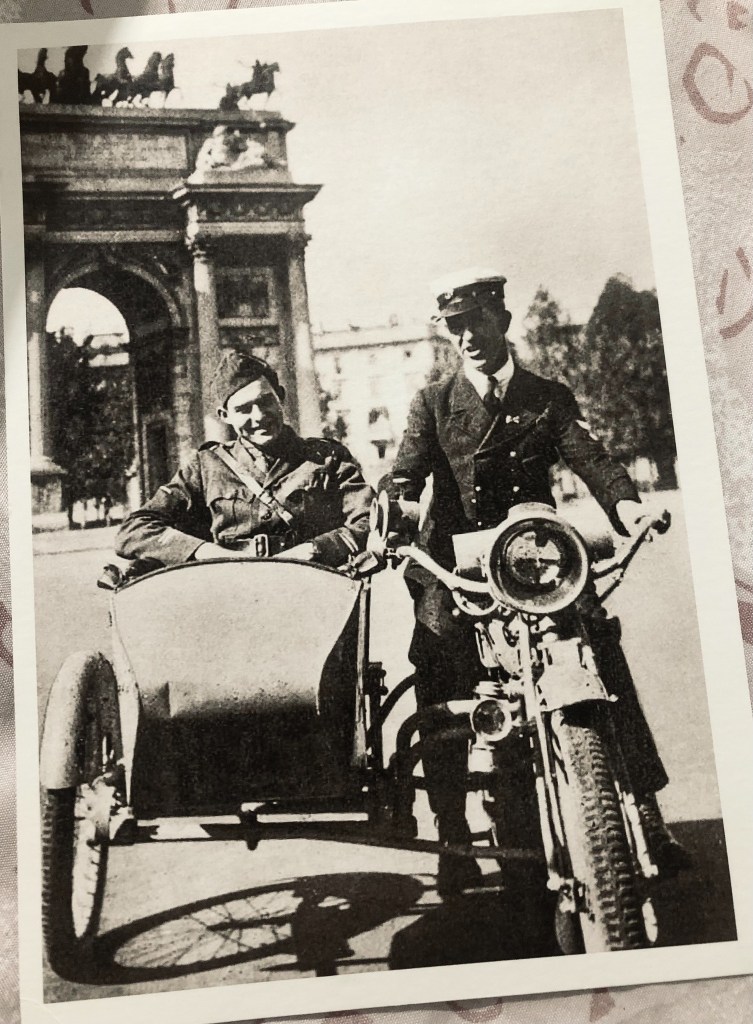
Last night I walked into a small alley in Milan and entered a lovely art studio where the owner printed hundreds of interesting photos from archives. The amazing thing is that he (the owner) can passionately tell stories from every single photo. He was patiently answering my questions (some were stupid hahaha but I just asked). We had a lovely talk and he said I could pick two more photos for free as a gift. Moments later when he put on the glasses and started writing a story at the back of the photo for me, I said how nice his glasses’ frame was – because it was really nice and pretty unique with turquoise color, so he decided to give more me gifts – also maybe because of me mumbling some Italien words he told me in a very clumsy way but somehow he found it funny or (maybe) cute . I told him that it was okay, he gave me enough gifts already but still, he selected a photo for me and of course, he didn’t forget to tell me the story behind it.
Traveling reminds me of how lucky I am to be able to see the world and taste new food (sometimes good, sometimes not so good but memorable ) but among others to meet very kind people who constantly make me believe more in kindness and living meaningfully. Soooo as long as you want to know and are patient and curious enough, stories will automatically come to you.
Well, how to start… It’s already the second week of 2023 😀 So in this blog, I will just write down my stream of thoughts – whatever comes to my mind, I will write it down. There will be no structure, and no focus points, whatsoever 😉
Many years ago I would start a new year by writing down my plans and resolutions but I already stopped doing it three or four years ago. It was when I knew everyday is a day to plan and work for my future; I do not need to wait for a new year to do that 😛
I have just come back from a trip to Switzerland and Italy with my very best friend from Vietnam. We have been friends since we were teenagers and of course, like many other friendships, there were ups and downs. There were times of interruptions because we both had our own group of friends but in the end, we crossed paths again. I am glad we did.
So for the start of 2023, I would like to talk a bit about 2022. I don’t know how to describe it. For me, it was like this: I see myself celebrating New Year (of 2022) with beautiful fireworks blooming outside my windows, then welcoming a cat named Su to my home on Tet holidays, clumsily holding a croissant in Paris on a summer day, one morning waking up with the sounds of a coyote singing to my ears, running around the Albertina auditorium for the conference, hugging and feeling the soft mouth the dog called Matcha in London, and then now 2023. All other events such as my graduation ceremony, my last trips, and other travels were not there. It was not because these events were not important but mainly because 2022 had passed so swiftly that I could not even feel it…at all. But yes so many things happened in 2022. I will take a deep breath and try to remember them chronologically – of course, I will not tell everything as it would take me the whole night to write them down hahaha. I will simply categorize them into topics.
Learning. Congratulations! 2022 marks the year that I graduated from my Master program. What makes me feel so proud is that I adapted to the international environment pretty well. There was not a single moment during the program when I felt alone or inferior. Being with people from different continents helps me a lot in becoming more cautious when dealing with diversity and understanding what diversity means – till today I am still learning. Being with people who have different backgrounds, opinions and ideals helps me understand better why the world is functioning the way it is. Diversity and differentiation help me explain why sometimes a nod of assent or a “yes” can be so difficult to make but it can be so easy if we are open enough. Despite all the complaints I made, I still think the Master I took is valuable in so many ways, especially when I talked to people who have never had a chance to immerse themselves in such an international environment. In the end, acquiring knowledge is a lifetime process and we can always do it with the help of many tools outside our school. The people we meet during our study MATTER more than anything. We might not remember the complicated equations in economics or statistics two years later (or maybe right after graduation, we already forgot them :D) but we will always remember that Silvia, that Lini or that Marcela who cooked the very good Gallo Pinto, Gado Gado, or the one and only shrimp pasta that we love so much right?
Change. As I travel with different friends, I realized change is inevitable. Someone you think you know can be a stranger to you at some point during the trip. Traveling is magical, it makes new faces become familiar as you make friends along the way and familiar faces become new again as you explore other characteristics of your friends that you never knew before. I am happy that all my friends decided to continue the friendships after traveling with me 😛 And I realized… yes, I also changed a lot.
Cry. I cried a lot in 2022. I remember one day in August I cried in the bathroom for almost one hour straight. I had a job at school organizing the summer university and for the first time in my life, I worked completely in german. I really really learned a lot but it was stressful, not because of the tasks but because of the pressure I put on myself that I must do this perfectly. But the job was not the only reason, other factors included, I tried to hold them all inside so much until that Saturday morning, I exploded. I ran to the bathroom, sat in a corner, and cried and cried. It’s completely OK to cry. If you want to cry, cry then stand up and continue fighting. That’s what I did.
Pride. People like my mentor constantly remind me that I should be proud of myself. I did not usually celebrate my achievements because I thought there was no achievement. Everything I accomplished is simply what I must do. But lately, I have learned to celebrate small things. Still, I am learning how to be proud of myself, step by step. My childhood plays a role in developing this kind of mindset. Getting an A or A+ was my duty and as it was my duty, there was nothing to be proud of. My grandparents loved me so much, more than anything in the world but they almost never praised me. I know why. They always wanted me to try for the better and they were afraid of me forgetting to strive for excellence if they showed their contentedness to me. So it might be strange but yes, pride is a feeling that does not always come naturally. For those who are reading this blog, you should be proud of yourself also.
Honesty. Being honest gives me a very good sleep. And as I get older, a night of good sleep is everything hahaha. During the year, there were moments of sadness, of uncertainty, of disappointment, of feeling betrayed but never a moment of emptiness. I think because I have learned to be honest. And being honest here means being honest with my own feelings, and with the answers that I gave people and myself. You might ask how it can be possible to be always honest; for example, when someone you love cooks something for you and you do not think it’s good, how can you be honest about it? Then I have a tip for you – I have applied it and it works. Emotions deal with emotions and rationality should deal with rationality. In that case, you do not think the dish is good but what do you feel about your friend cooking for you? Express that feeling instead. Instead of praising the dish, you can say you really appreciate the invitation and feel so lucky and happy to have the chance to be there spending time with your friend and seeing her / him cooking for you. Then you do not have to tell a single lie, even a white lie. As your friend cooks for you, he / she might be still very excited and of course looking for something positive from you, any analysis of “a bit less salty” or “the chicken is just a little dry” is nothing constructive but disappointment. Misunderstanding can happen. You can wait for the feelings to go away and when you meet your friend again, maybe a week later, you can sit down and say “do you remember the chicken you made last time for me….” then you can analyze and discuss slowly the “rational” side of how it could be done better. At work, I have to give a lot of comments on designs and this tip works just GREAT.
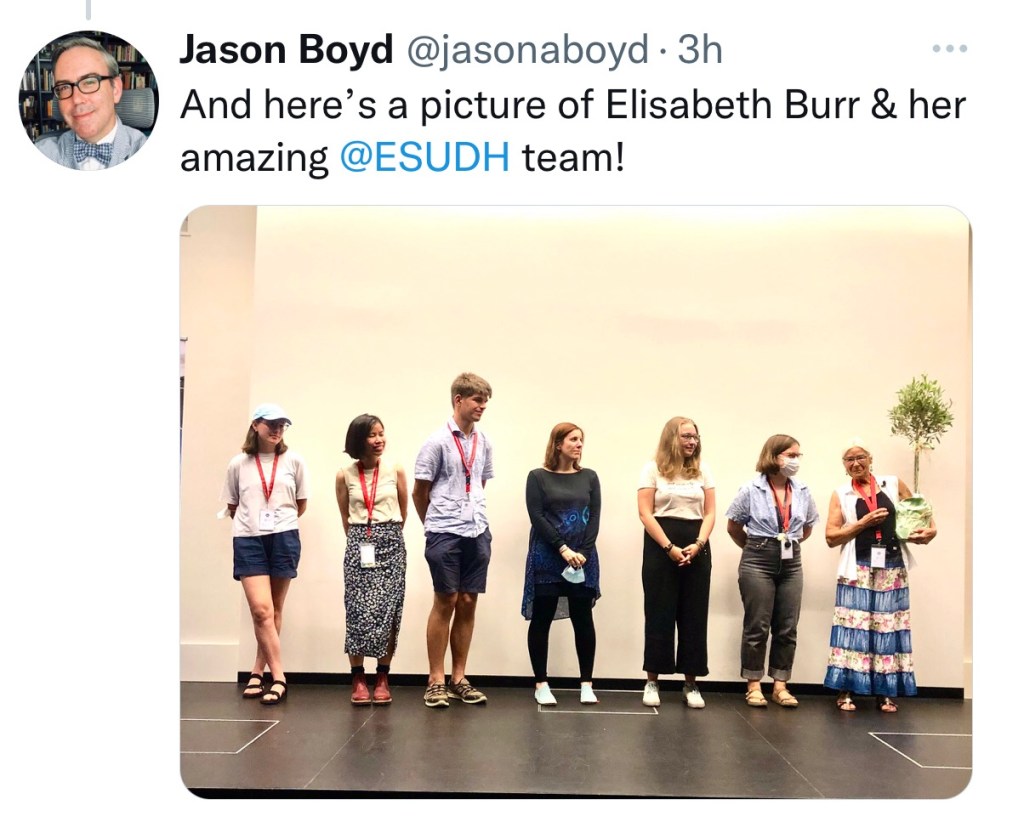
Below are some of the photos that I love the most in 2022…
I really loved working with them – I learned a lot. Prof. Dr. Elisabeth Burr is not a professor in my faculty but I did learn from her A LOT.
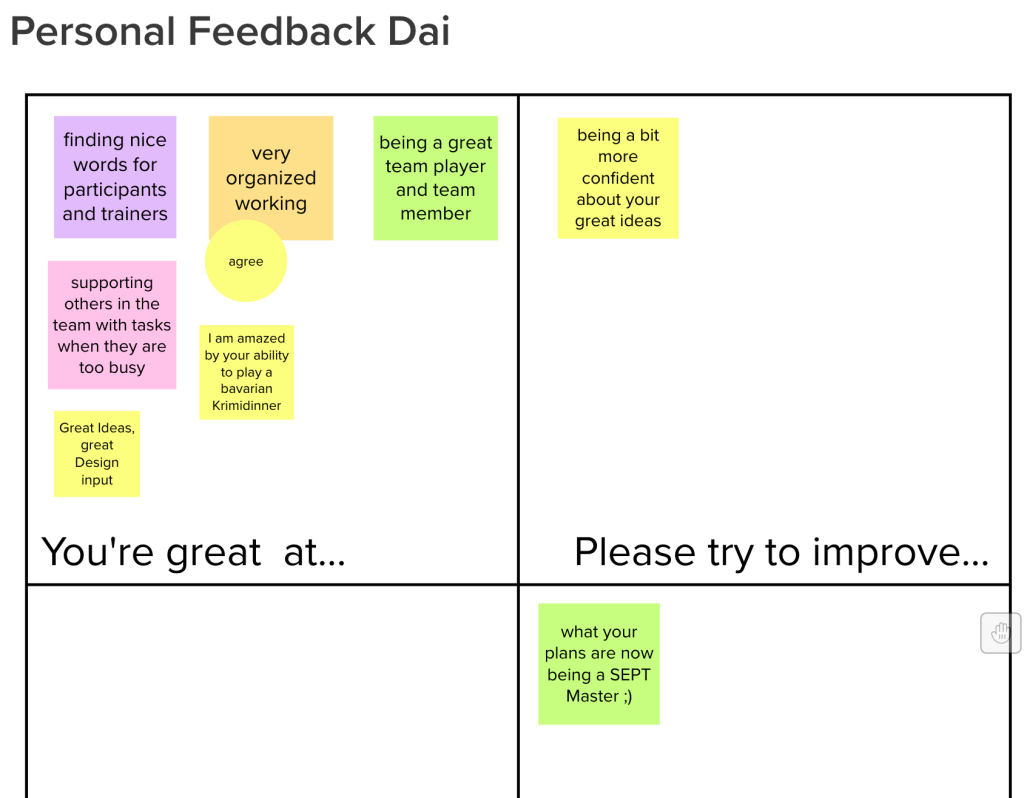
I worked with another team in SEPT for three months and it was really fun. Got this feedback from them and I discovered my new talent which is to play a bavarian Krimidinner and imagine that I did it in German. I died hahahahahaha
This photo because Su and I looked COOL
Photos of my travels will be posted in another blog as I have not had the time to organize them yet – thousands of them…🤪
To end the blog, I have the same question as always… I do not know what I would feel when I read this blog again one year later; who I will become; where I will be and with whom I will be,… many many questions. Let’s hope for the best and just continue being kind and curious. See you again in another blog 😉
Ich glaube, die wertvollsten Bestandteile meines Lebens sind meine Gesundheit und meine Zeit. Im Laufe Lebens habe ich oft entdeckt, dass ich beide, wenn sie einmal weg sind, nie wieder zurückbekommen kann.
Nach meiner Rückkehr aus dem Norden hatte ich einige Probleme mit meinen Knien, meinem Bauch und meinen Gelenken. Glücklicherweise haben sie nur zwei Wochen gedauert. Während dieser Zeit hatte ich große Angst und dachte darüber nach, was alles passieren könnte. Obwohl ich wusste, wenn das Wetter kälter wird, meine Knien und Gelenke immer Probleme bekommen, machte ich mir dennoch Sorgen. Das Wichtigste war, dass ich mich nicht sicher fühlte, wenn ich Sport machte. Ein Freund von mir hat mir gesagt, dass ich mit kaltem Wasser duschen sollte. Ich habe gehört, dass es mein Immunsystem und meine Muskeln stärken kann. Manchmal have ich das gemacht und es hat sehr gut funktioniert, aber ich dusche um Herbst und Winter lieber warm als kalt. Es ist sehr unbequem, wenn Körper nicht gut funktioniert oder ein Problem hat, egal welches. Ich freue mich sehr, weil alles wieder gut ist und ich alles wieder so machen kann, wie ich will.
Ich frage mich manchmal, wie meine Gesundheit in fünf oder zehn Jahren sein wird. Ich habe das Gefühl, dass meine Gesundheit jetzt nicht mehr so stark ist wie vor zehn Jahren, aber ich glaube, dass ich wenn ich eine bessere Lebensweise annehme, stärker und stärker werde. Was mich am meisten beunruhigt ist, dass ich nie genug schlafe. Zum Beispiel ist es jetzt, während ich diesen Text fertigschreibe, schon zu spät. Aber es gibt ein Sprichwort, das besagt: “Die Person, die mehr schläft, lebt weniger”… Und über dieses Thema spreche ich jetzt, über das Zweitwertvollste in meinem Leben: Zeit.
Wenn es etwas gibt, über das man sich sicher sein kann, dann ist es, dass unsere Zeit begrenzt ist. Deshalb sollte man mit seinen Entscheidungen vorsichtig sein, besonders in Freundschaft und Beziehung. Jemand, den oder die ich in mein Leben lasse, bedeutet ein Investment meiner Zeit. Wenn es die richtige Person ist, ist es ein gutes Investment mit vielen positiven Erfahrungen, die uns beiden helfen können zu wachsen. Zum Beispiel könnte es, wenn eine Freundin von mir gut im Planen und Ausführen ist, mir viel Zeit sparen, mit ihr etwas zu machen. Beim Gegenteil müssten wir, viele Kompromisse eingehen, was uns am Ende sehr ermüden würde. Die letzten Wochen hatte ich keine Zeit für mich. Es gab zu viele Feiern und jeden Tag fühlte ich mich immer erschöpft, geistig und körperlich müde. Ich hatte schon lange keine Zeit mehr, etwas zu malen, Bücher zu lesen, im Wald radzufahren oder Deutsch fokussiert zu lernen. Aber bald habe ich wieder “Me-time” und ich freue much sehr darauf.
Nach der Reise in den Norden hatte ich komplett das Zeitgefühl verloren und schon war mein mein 30. Geburtstag.
Meine Zwanziger wurden gerade mit vielen schönen Erinnerungen abgeschlossen – manche haben mich zu der Person geformt, die ich heute bin, und manche haben mein Leben verändert.
Eine Freundin von mir hat mir gesagt, dass Studien gezeigt haben, dass der Höhepunkt des menschlichen Lebens zwischen 30 und 33 liegt. Jetzt bin ich also fast da, am Höhepunkt, aber es stimmt auch dass, “das Leben passiert, wenn wir damit beschäftigt sind, zu planen.” Deswegen, bleibe präsent und tauche in den Moment ein. Wer weiß, wann der Höhepunkt kommt?
Ich bin sehr dankbar, dass ich vor 30 viele Dinge erleben durfte. Manche davon gelten als einmalig: Ich habe das Aurora und die Milchstraße gesehen; ich habe die (wahrscheinlich) besten Aprikosen der Welt probiert, auch Rentierwurst; ich habe einige der schönsten Sonnenuntergänge und Sonnenaufgänge erlebt; ich in in einem Zug gefahren, der durch eine der schönsten Bergstrecken Europas gefahren ist – die Leute sagen, er bietet eine noch beeindruckendere Aussicht als der durch die Schweiz, aber die Schweiz hat einen besonderen Platz in meinem Herzen, also bezweifle ich es. Hierüber werde ich noch einmal schreiben, wenn ich in der Zukunft die Schweiz besuche; ich have wahre Liebende gesehen, die zusammen alt wurden und mein Herz schmilzt immer, wenn ich diese Momente sehe; und so viele andere erstaunliche Dinge, die keine Worte vermitteln und keine Fotos zeigen können.
Ich bin weit gereist, um mich selbst besser kennenzulernen, um festzustellen, dass ich vietnamesischen Kaffee immer lieben werde, dass meine Lieblingssuppe immer Pho sein wird, dass mich nichts glücklicher macht, als Freundlichkeit zu sehen, um dass die Menschen, solange du fragst, dir immer helfen werden.
Zu meinem Geburtstag hat mir eine Freundin von mir einen Faultierballon geschenkt. Auf dem Weg zurück nach Hause, sahen mich die Leute lächelnd und ich war mir sicher, dass ich einige Fremde auf der Straße für einige Sekunden glücklich machte. Das ist eine schöne Sache, um sie an seinem Geburtstag zu tun, nicht wahr? 😉
Eine Nacht bevor ich Stockholm angekommen war, hatte ich eine der schönsten Nächte meines Lebens. Ich war unterwegs mit einem Kreuzfahrtschiff von Helsinki nach Stockholm. Am Anfang fand ich die Kreuzfahrt, entsprechend meiner allgemeinen Vorstellung von Kreuzfahrten auf dem Meer, sehr langweilig. Aber ich hatte mich getäuscht, denn wie sich herausstellen sollte, würde ich noch viele interessante Geschichten erleben.
Es gab einige Paare, in ihren 70ern, die sehr verliebt waren. Es war sehr süß, Menschen zu sehen, die zusammen alt geworden sind. Es war eine Akustik-Abend mit einem sehr guten Sänger, der sehr romantische Klaviermusik spielte und dazu sang. Silvia und ich hatten nur draußen gestanden und zugeschaut, aber als er (der Sänger) uns sah, lud er uns ein, hereinzukommen, um die Musik zu genießen. Er war super nett. Wir hatten eine tolle Nacht auf dem Kreuzfahrtschiff.
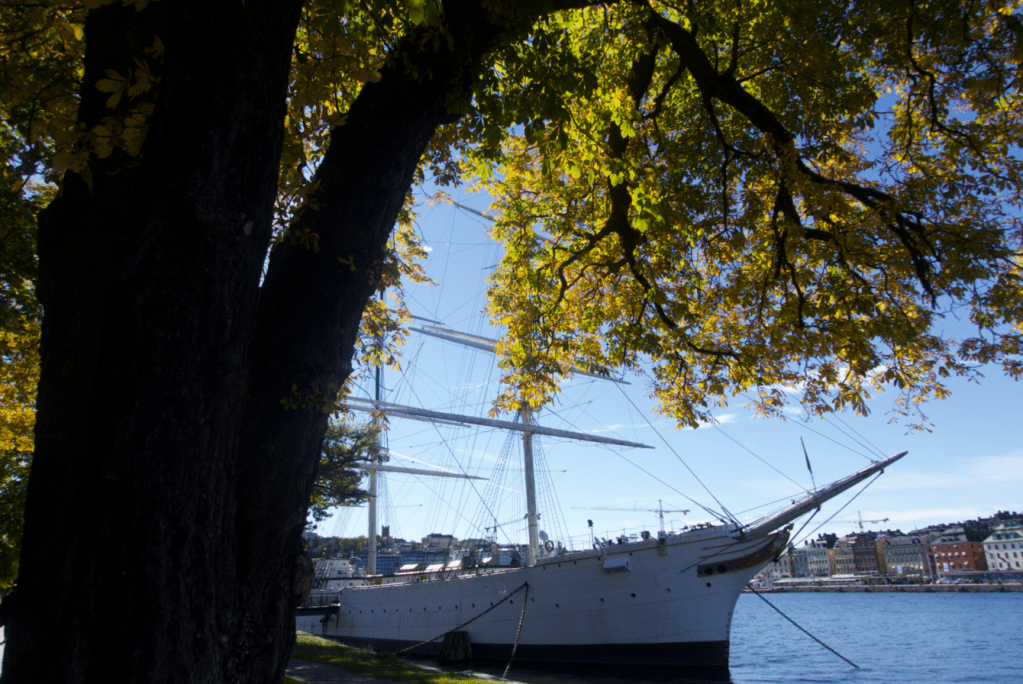
Am nächsten Tag, sind wir in meiner späteren Lieblingsstadt angekommen. Nachdem ich eine nicht sehr gute Erfahrung in Helsinki gehabt hatte, hatte ich keine Erwartung an Stockholm. Für mich war es, vielleicht nur eine weitere Stadt und eine touristischer Ort, denn als ich ankam, sah ich sehr viele chinesische Touristen. Aber ich hatte mich noch ein mal getäuscht., Stockholm war super und ist meine Lieblingsstadt geworden. Der Vibe war gemütlich und heiter, aber was mich am meisten überrascht hat, sind die Leute. Sie sind äußerst freundlich und warm. Sie sind genau das Gegenteil von dem, was ich über die Leute im den Norden gedacht habe: Kalt und nicht gesprächig.
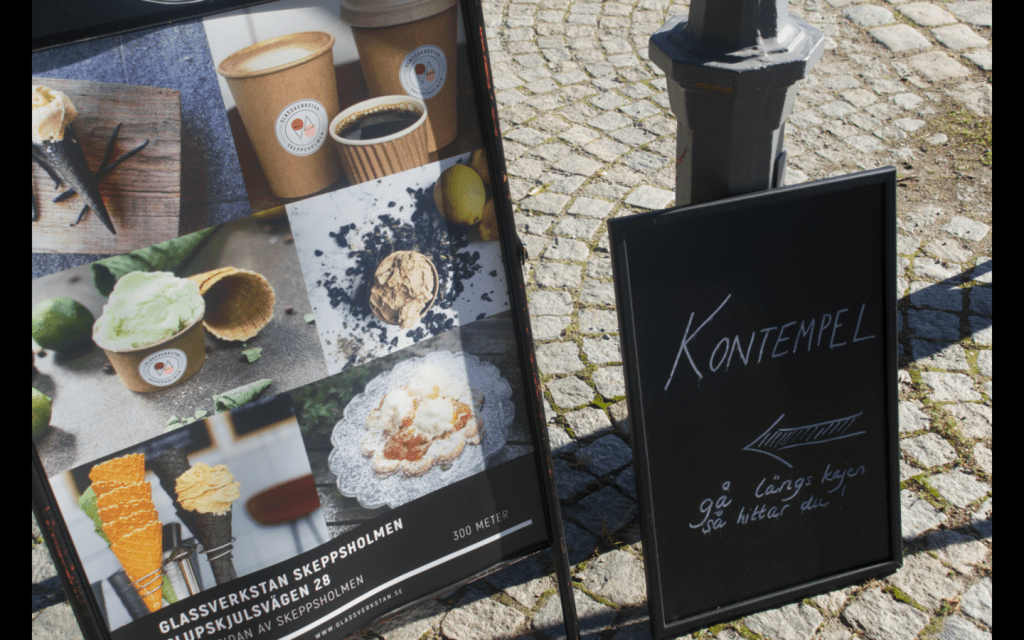
Neben dem Vibe und der allgemeinen Freundlichkeit der Leuten, haben wir viele unvergessliche Gepräche mit Fremden erlebt. Einmal, als ich in einem Teeladen war um ein Geschenk für meinen Mentor zu suchen, hatte ich dort ein sehr interessantes Gespräch mit zwei nette Damen. Sie haben mich viele Fragen zu meinem Mentor gestellt. Ich weiß nicht, warum sie so interessiert waren, aber ich hatte eine gute Zeit mit ihnen. Nach dem Teeladen sind wir zufällig einem Fotografen begegnet, der uns gezeigt hat, wo wir unser gewünschtes Souvenir finden konnten. Wir haben auch einige Fotos mit ihm gemacht. Dann hatten wir ein kostenloses Frühstück, denn weil wir hatten kein Bargeld und das Café akzeptierte nur Bargeld. Also, die Besitzerin des Cafés fragte uns, warum wir dieses Café ausgewählt hätten, und wir sagten, wir wanderten herum und vertieften uns sehr in unser Gespräch, als dass wir uns verloren und dieses Café gesehen hätten. Sie sagte, das Konzept des Cafés sei es, die Leute zu ermutigen, miteinander zu reden, also liebte sie unsere Geschichte wirklich und deshalb bot sie uns ein kostenloses Frühstück an.
Das Cafe heißt Kontempel
Diese Geschichten ließen uns wieder an Freundlichkeit und Überraschungen im Leben glauben. Weiterhin glaube ich, dass ich mich sehr glücklich schätzen kann, weil ich immer gute Leute kennenlerne.
Vietnam National University – Ho Chi Minh City University of Social Sciences and Humanities Faculty of English Linguistics and Literature ——————————————- Course: Social Issues in the US Ho Chi Minh City – April 2013
Illegal immigration is a controversial problem in the United States since it has both positive and negative impacts on the US economy. Many Presidential Administrations from George Bush to Barack Obama and others before them admit that the US immigration system is outdated and needs reform. However, there is still little change in the immigration policy due to the important role of illegal immigrants in the US economy. In 2008, illegal immigrants accounted for 5,4 percent of the US civilian labor force (Jeffrey S.Passel and D’Vera Cohn, 2009). In a recent estimate from the Council of Economic Advisers, immigrants in general contribute about $37 billion a year to the US economy (1) and because of this, it is impossible to single out illegal immigrants from the US economy for several reasons. The purpose of this paper is to find out the answer to the two questions 1) How does illegal immigration affect the US economy? 2) Does the contribution of illegal immigrants outweigh the negative effects it has on the economy?
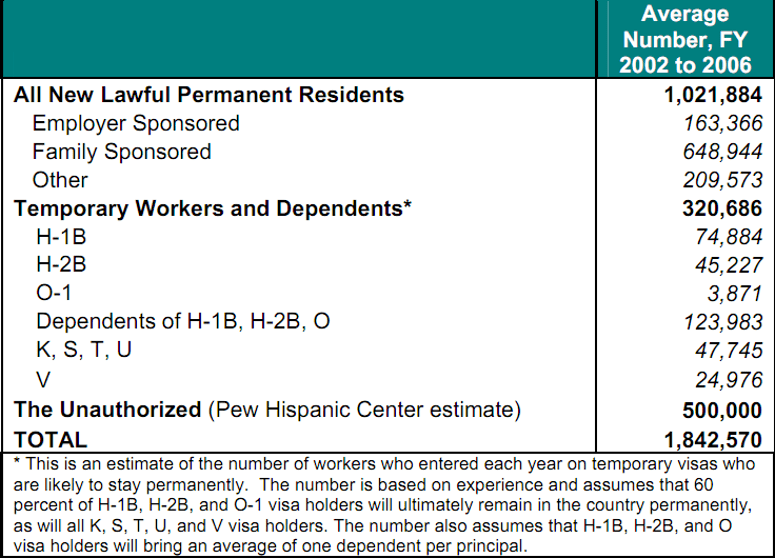
The USA is known as a country of immigrants. The annual level of immigration averaged about 1.8 million between the fiscal years 2002 and 2006. According to table 1, on an average of every 1.8 million annual immigrants, there are 500 thousand unauthorized or illegal immigrants who enter the US unofficially or overstay legally permitted periods of entry and have no legal rights or status. As the Pew Hispanic Center estimated there were about 11.1 million illegal immigrants living in the US in 2012. This is not a small number therefore their contribution to the US economy is considerable and undeniable.
Figure 1.
Source: Pew Hispanic Center There are several reasons explaining why there are many illegal immigrants in the US. Firstly, compared to the past the number of educated and skilled people in the US is higher. In 1965, only 5,921 thousand students attended college programs and in 2012 the number reached 21,557 thousand, over 4 times higher (2). Moreover, the number of US-born working-age adults who had not completed high school is just 8 percent (Gordon H. Hanson, 2009). The number of skilled US-born workers is increasing; the need for low-skilled workers at the same time is also increasing. Therefore, employers see illegal immigrants as an important source for low-skilled jobs such as agriculture, maintenance, construction, and other jobs which require more physical strength than education. Secondly, illegal immigrants can earn much more in the US than in their homeland even after balancing the differences in expenditure between the two countries. The income in the US can be 2.5 times higher. These two main reasons encourage people who do not have illegal conditions to enter the US, trying to find ways to illegally stay and work in this country.
The first impact illegal immigrants have on the US economy is that they make the economy’s productivity growth. This impact can be considered a positive one. According to Giovanni Peri, an economist at the University of California, in the states with more illegal immigrants, skilled workers make more money and work more hours which leads to the growth in economy’s productivity, and between 1990 and 2007, illegal workers had increased legal workers’ pay in complementary jobs by up to 10 percent. (3) However, at the same time, they cause trouble for the US native-born – less educational workers. Employers obviously prefer illegal workers because they can bring more benefits to their businesses. If a low-education worker wants to win over an illegal worker for the same position, he or she will be lowered salary. And sometimes illegal workers join the battle with skilled workers. There are two choices for the skilled workers, they can either accept the job with a lower wage or refuse the offer. With illegal interference, there are definitely undeniable negative economic effects on native citizens. Employers tend to favor illegal immigrants as their workers since these people are not able to be eligible for any kind of welfare programs which make them less paid than low-skilled native workers. Generally, illegal immigrants will create benefits for employers which leads to an increase in national income, and at the same time, they put more pressure on and reduce the earnings of lower-skilled and sometimes educated native workers.
Secondly, there is an argument that illegal immigrants have become a burden on the national budget. In this paper, I will focus on the imbalance between the tax collected and the budget spent on health care and education for illegal immigrants. Even though illegal immigrants help to increase productivity and as a result increase the national income, they also appear to be the group that exceeds the cost of the services they use. To deal with this problem, the state and local governments have to incur the cost of providing services for illegal immigrants. One of the reasons to explain it is that most illegal immigrants in the US have low-income jobs mainly in agriculture, maintenance, construction, etc., and because of this the tax together with other kinds of fees they have to pay for the government is also low compared to US-born native citizen and the costs that the government incur for services they use especially the ones related to health care and education.
Education is one of the most costly expenditures that the state and local governments have to incur for illegal immigrants. In 1982, the Supreme Court stated that children may not be excluded from public school due to their immigration status. The second generation who are born to illegal immigrants in the US will receive the same education in public school as the US-born native citizens because they are considered to be US citizens. The significance of this is that the money paid for their education is higher than the native-born’s. Because they are born to illegal immigrants, their English is not as good as that of native-born students. As a result, the costs incurred for their English proficiency classes will be 20 to 40 percent higher than the native ones (Cardenas, Jose A. and others, 1976) (Albert Cortez, 2004). Illegal students make up about 4 percent of the school-age population (A CBO paper, 2007) and the average annual cost for a student born to illegal immigration is about $7,500 per student and $11.2 billion in 2006 for the total costs of providing education to these students. This number reached $30 billion in 2009 (S&P Study, 2009) and with a steady annual number of illegal immigrants to the US, the costs for education can be higher in the future obviously this number is not small which puts great pressure on the state and local budget spending.
Besides, the budget spending on illegal immigrants using services in the health care system is considerable. The Census Bureau estimates that immigrants both legal and illegal are between 2 and 2.5 times more likely to lack health insurance (Robert J. Mills, Shailesh Bhandari, 2003). However, they still can use emergency rooms and public clinics for health care services related to children, pregnant women, families with dependent children, and elderly or disabled individuals by getting Medicaid coverage. Officially, these illegal immigrants are not able to be eligible for Medicaid due to their lack of health insurance; they are, however, acceptable for emergency cases mentioned. Another reason explaining why illegal immigrants are less likely to have health insurance is that immigrants both legal and illegal are somehow younger and healthier than US-born citizens (Leighton Ku, 2009). The costs they use for emergency health care services will be incurred by the state and local budgets. For all of the mentioned reasons, it usually appears like these illegal immigrants receive more than what they have paid through tax collection. As a result, the amount of budget spending for health care services is increasing day by day due to the fact that the annual number of illegal immigrants is growing steadily.
While reconsidering the positive and negative effects that illegal immigrants have on the US economy, there is an argument that illegal immigrants are exploiting the US economy because they are using services that cost more than the tax they pay to the government. Compared to the US citizens who have to pay higher taxes and pay fees for other services in order to use them eligibly, illegal immigrants, however, pay less and use more. For example, in Colorado, the annual cost of education for illegal immigrants is between $217 and $225 million while the tax collected from them is only between $159 and $194 million (Robin Baker and Rich Jones, 2006) (Elizabeth Burger, 2006) (Baker and Jones, 2006). There is a big gap between the costs and the collected tax, and this causes an imbalance in the state and local budget spending and this causes a great effect on the US economy. Even though there are efforts to lessen the costs of budget spending on illegal immigrants, little change can be made. According to the Congressional Office – a federal agency within the legislative branch of the US government providing data to Congress, in 2007 the costs incurred for the using services of illegal immigrants is higher than the tax revenues they generate for the government and there are limited options or ways to minimize these costs. These costs, however, account for a small percentage of the total costs that the state and local government spent for US citizens in general (A CBO paper, 2007).
According to Chart 1, illegal immigrants are accounted for a small percentage of the US total population. However, its effects on the US economy are considerable and worth debating because it is fundamental to know whether their impacts are more positive or negative. In general, most people agree that there are more benefits than drawbacks. Illegal immigrants come to the US with the American Dream meaning that they want to have a better life by working hard to earn more compared to what they can earn in their own country. Some illegal immigrants try to integrate into the US society by finding stable jobs, and making their own businesses and when having children they will send them to public schools, and this leads to some arguments for education spent on their children. However, this expenditure is just a small percentage compared to the total number of spending for US-born citizens, so it is hard to conclude that illegal immigrants are exploiting and serving as a thread to the US economy. In other words, the contribution of illegal immigrants to some extent outweighs the negative effects they have on the US economy. Moreover, while many people are paying so much attention to legal status, it is better to think more about these illegal immigrants’ education. It is undeniable that illegal with high education makes a bigger and more positive contribution to the US economy.
The limitation of this paper is that it lacks generalization. Firstly, most of the information used in the paper is estimates at a certain point in illegal immigrants’ life, meaning that it needs a more forward-looking view. The effects of illegal immigrants should be studied for the entire of their life, not just the time that they can work and contribute to the national income. Secondly, according to economist Madeline Zavodny, for such children who are US citizens at birth, even though they are theoretically US citizens, some studies still consider them as immigrants and this issue is still debatable. Therefore, some may not agree with this when I mention the education and health care spent on these children as US citizens. For decades, illegal immigration has become a debatable and controversial issue in the US. After considering the impacts of illegal immigrants on the US economy, especially on jobs and wages, and budget spending related to education and health care, the effects they create are two-sided. However, having analyzed the data and information, I believe that the benefits that illegal immigrants have on the US economy are more important because they are contributing more and more to the US economy while the services they are using cost a small sum of money in the local and state budget.
Reference Works Cited: A CBO paper, The Impact of Unauthorized Immigrants on the Budgets of State and Local Governments, pp.8, Congressional Budget Office, Dec. 2007. Albert Cortez, Insufficient Funding for Bilingual Education in Texas, IDRA Newsletter – San Antonio: Intercultural Development Research Association, 2004. Baker and Jones, State and Local Taxes Paid in Colorado by Undocumented Immigrants, Issue Brief No. 3, Denver: The Bell Policy Center, June 30th 2006. Cardenas, Jose A., and others, Bilingual Education Cost Analysis, San Antonio: Intercultural Development Research Association, 1976. Elizabeth Burger, Immigration in Colorado: State Impact and Recent Legislation, Legislative Council, Staff Issue Brief No. 04-06, Denver: Colorado General Assembly, 2006. Gordon H. Hanson, The Economics and Policy of Illegal Immigration in the United States (pp.8), University of California – San Diego and National Bureau of Economic and Research, 2009. Jeffrey S. Passel and D’Vera Cohn, A Portrait of Unauthorized Immigrants in the United States, Pew Hispanic Center, 2009. Leighton Ku, Health Insurance Coverage and Medical Expenditures of Immigrants and Native-Born Citizens in the United States, American Journal and Public Health, Vol 99 No.7 pp.1323, July 2009. Robert J. Mills, Shailesh Bhandari, Health Insurance Coverage in the United States: 2002, Bureau of the Census, 2003. Robin Baker and Rich Jones, Costs of Federally Mandated Services to Undocumented Immigrants in Colorado, Issue Brief No.4, Denver: The Bell Policy Center, June 30th, 2006. S&P Study, Costs and Benefits of Undocumented Immigrants, pp.2, Hispanic News, May 1, 2009.
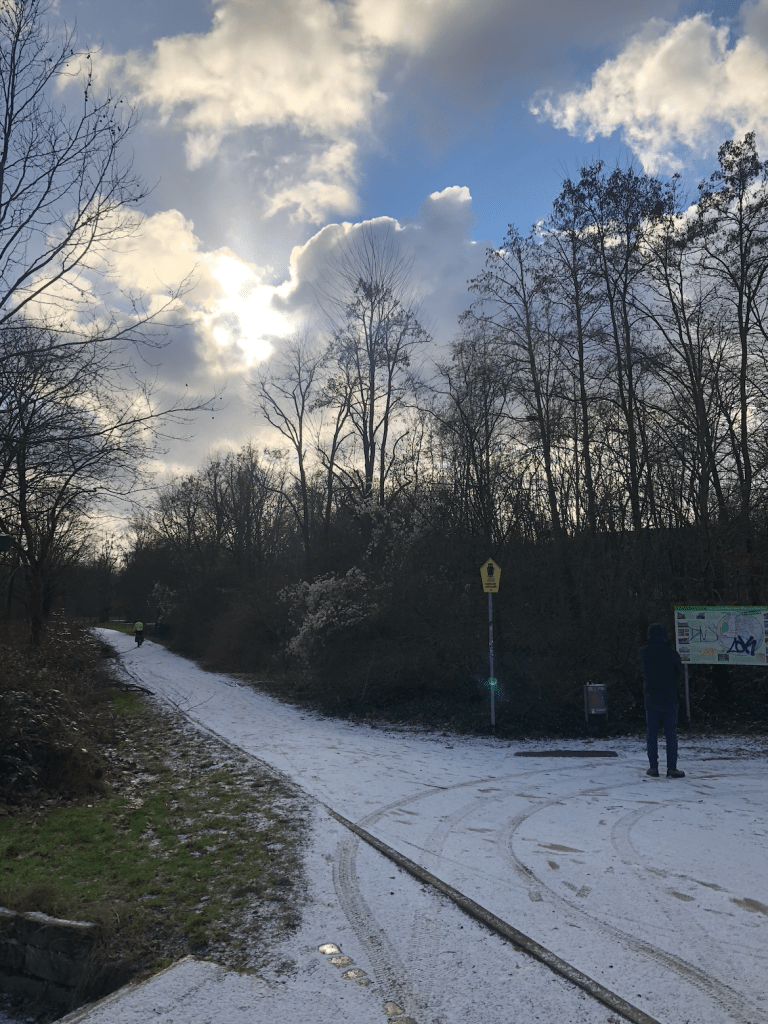
Heute fiel es mir schwer, konzentriert zu sein. Ist es, weil ich mein Leben jetzt alleine kontrollieren muss und es leichter einfacher ist, den Fokus zu verlieren? Heute habe ich einen kurzen Spaziergang gemacht. Ich wollte länger gehen, aber ich fühlte mich unwohl. Viele Gedanken lenkten mich davon ab, den Spaziergang schätzen zu lernen. Aber ich gebe nicht auf. Morgen werde ich es wieder und länger tun.
Es schien mir, dass die Aufgabe, zu gehen und zu schätzen, was ich sehe, höre, rieche, … die einfachste Aufgabe der Welt sei. Aber während ich spazieren ging, dachte ich immer wieder an andere Dinge. Ich sprach weiter mit mir selbst und stellte mir, die einzigen drei Fragen, die ich dann hätte haben sollen. Sie waren, wer ich bin, wo ich bin, und was ich tun möchte. Im dritten Studienjahr nahm ich an einer Diskussion teil unter dem Titel/zum Thema „Wer bin ich“. Es war in einem Kurs über amerikanische Identität. Was sollte ich auf diese Frage antworten? „Ich bin Dai“ – nein, es war nicht nicht nach deinem Namen gefragt; „Ich bin Studentin“ – nein, es war nicht nach deinem Beruf gefragt; „Ich bin Asiatin.” Jetzt musste ich noch einmal daran denken – Wer bin ich? Bin ich nur ich oder noch mehr? Oder bin ich nichts? Die erste Frage hatte mich schon runtergezogen. Ich wollte den Spaziergang nur noch beenden, aber mir war auch bewusst, dass ich so schwach war, wie ich damals aufgehört hatte. Dann machte ich noch ein bisschen weiter. Und es war zu kalt, um es zu genießen. Aber ja, für einen aufmerksamen Spaziergang sollte ich sogar die Kälte zu schätzen lernen. Der erste Tag des aufmerksamen Spaziergangs war nicht so gut. Aber irgendwie war ich glücklich, weil ich wusste, dass der Anfang von etwas Gutem, das bald in der Zukunft passieren wird, nicht immer einfach ist.
Zu Hause schaute ich dann das Deutschheft an und ich hatte deutliche Angst. Ich hatte jetzt noch so viele Seiten, die hätten fertig gemacht werden sollen. Ich muss sie heute oder morgen erledigt haben. Dieses Schreiben könnte das letzte sein, in dem ich frei schreiben kann, was ich will, da ich bald mit dem Testformat beginnen muss. Darum fühlte ich mich ein bisschen traurig. Aber ich war schon zu dem Schluss gekommen, dass ich nicht alles gleichzeitig meistern konnte. Es gibt Dinge, die ich nicht in der Lage bin zu tun oder die einfach nicht geeignet für mich sind. Ich wundere mich wie es möglich ist, dass man sagen kann, “ich bin immernoch derselbe, nur noch selbstverliebter als früher.” Wir sind nicht immernoch dieselben. Wir haben uns verändert. Aber die Idee von “selbstverliebter als früher” finde ich sehr gut. Wir sollten immer in uns verliebt seinen.
Ich muss mich konzentrieren. Natürlich erinnere ich mich jeden Tag daran, dass ich mich konzentrieren muss. Ich muss akzeptieren, dass ich jetzt in Mathe nicht mehr so gut bin wie früher, aber ich kann besser Kontakte knüpfen. Und dass ich jetzt vielleicht Dinge schneller vergesse, wenn ich es nicht ständig überprüfe, aber ich beschäftige mich mit Deutsch, einer der schwierigsten Sprachen. Nur wenn ich diese Dinge akzeptiere, werde ich mir nicht mehr selbst die Schuld für Dinge geben, in denen ich nicht gut bin. Meine Gedanken sind normalerweise sehr kompliziert zu erklären, aber ich versuche es. Manchmal möchte ich nett zu mir sein, aber ich denke auch, dass diese Art des Denkens mich immer schwächer werden lässt. Ich möchte ein Kämpfer werden, nicht jemand, der leicht nachgibt. Hmmm aber man sagt auch “Der Klügere gibt nach.”
Ist es heutzutage schwer, zufrieden zu sein, wenn sich die Welt so schnell verändert? Wir könnten obsolet werden, wenn wir nicht versuchen, uns selbst zu aktualisieren. Ich frage mich, ob wir das überhaupt wollen. Es klingt genauso wie „es ist okay, nicht zu wissen, aber es ist auch NICHT okay, nicht zu wissen“.
Gestern Abend verbrachte ich vier Stunden mit den Umfragen und sammelte ich auch einige Antworten für meine Abschlussarbeit. Aber für etwas anderes hatte ich keine Zeit. Bei einigen Umfragen brauchte ich 30 Minuten. Bei manchen Umfragen fühlte ich mich so dumm. Nachdem ich mit einem Freund von mir gesprochen hatte, entschied ich mich, eine Person einzustellen, die dies für mich tut. Und ich habe eine gefunden. Jetzt muss ich keine Umfragen mehr machen. Ich muss mich nur noch auf die deutschen Umfragen konzentrieren, was zeitaufwendig sein kann, aber da sie ist auf Deutsch sind, helfen sie mir beim Deutschlernen. Ich fragte mich, warum mir diese Idee nicht schon früher gekommen war. Ich sollte meine Zeit für die Dinge nutzen, die mir gerade wirklich wichtig sind: Mein Deutsch und meine Abschlussarbeit. Ich weiß, dass das Sammeln von Antworten ein Teil meiner Abschlussarbeit ist, aber ich habe auch noch viele andere Dinge zu tun, um eine sehr gute Abschlussarbeit zu schreiben. Daher war ich froh, dass es jetzt “vorbei” war. Hoffentlich wird die, die ich einstellt habe, einen guten Job machen und mir genug gute Daten liefern.
My journey to Germany: I got rejected by DAAD, then get rejected again and again before I got accepted to a Master in Convergent Journalism in Berlin, but I ended up with the MBA program at the University of Leipzig.
How I got “my own scholarship.”
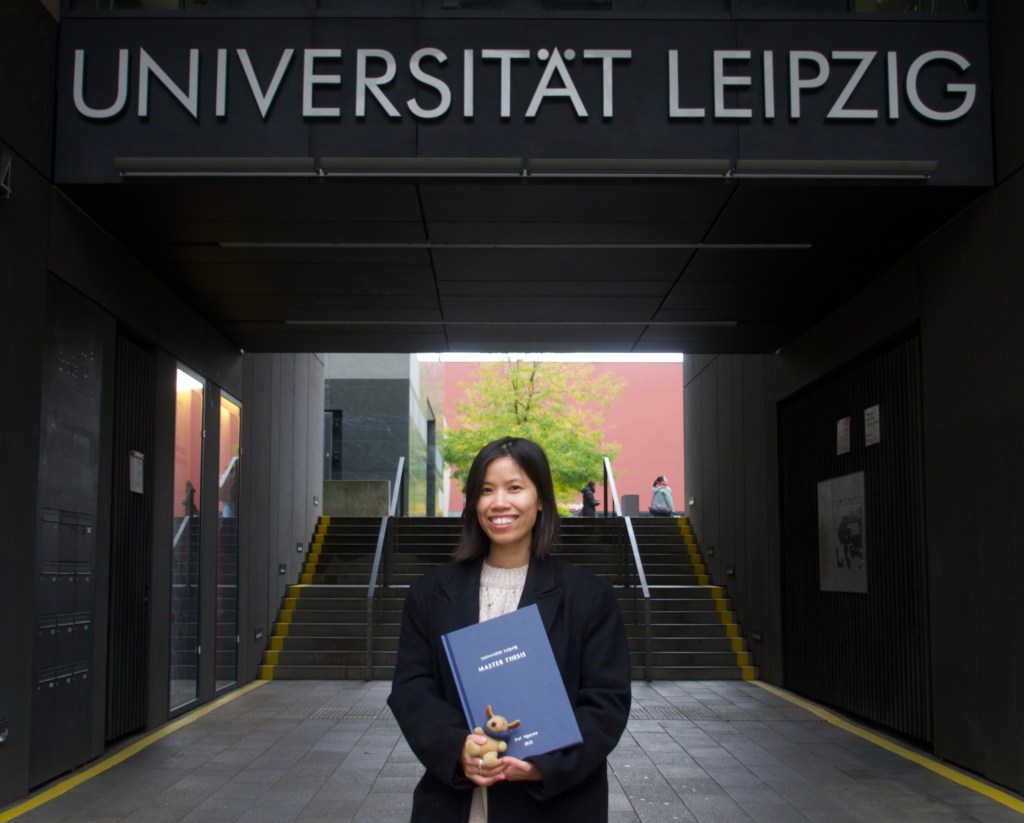
Me and my Master Thesis
Update on Dec 13, 2022: I officially finished my Master Degree at Leipzig University with a “Very Good” (in German: Sehr gut) degree.
Four years ago I started to plan my study in Germany. I scanned through all the programs that could be a good fit for me. With my limited financial resources, I put all of my focus only on the programs sponsored by DAAD with the hope that I could get into one of them with a scholarship. In September 2019, I sent my application to the MBA SEPT International Program at the University of Leipzig. For this program, you can apply a bit later but for those who want to apply for the scholarship, the deadline is usually the end of September.
On the first of January 2020 at 6:30pm (Vietnam time), I received a rejection email. It was the first day of the new year. I didn’t get the scholarship. From my guess, one of the reasons is that my career path has little to do with either internationalization of firms or innovation which are the two main focuses of the program. I was extremely sad because my only hope was gone. The door was closed. Just to give you more background information about studying in Germany, schools only accept you to a Master program if your Bachelor degree is in the same field. For example, if I want to study business, I must have a Bachelor degree in business or economics. Me? I have a BA in Linguistics and only this ONE specific program in the whole of Germany accepts students from different backgrounds and I GOT REJECTED.
One might ask why didn’t I apply for a Master in Linguistics? I did. I applied to MA Multilingualism program at the University of Konstanz. But another rejection. Again my guess…one of the reasons could be that I did not write my thesis in my Bachelor…. and instead, I was working on a cultural project. And doing a thesis seems to be a very important part to acquire higher education in Germany. Of course, more than ten years ago when I was still doing my Bachelor, I did not know about it.
I was sad and desperate.
Let’s go back to the journey of preparation for my application. Even though it was a failed attempt, I still want to share about it. Back then I was working in a Tour Operator in Vietnam as a Marketing and Product Supervisor. Everyday started at 7:00am and ended at 11:00pm (earliest): me riding my scooter to work, finishing the work at 6:30pm, heading to german class (every Tuesday, Thursday, and Saturday) or business administration class (every Monday, Wednesday, and Friday), arriving home at 9.30pm, dinner + doing homework and learning Python on Coursera, then going to bed. This is “my everyday life” for more than one year. When I had my free evenings during weekends or holidays, I worked as a Vespa foodie guide to get extra income. For a “normal” Vietnamese to study abroad, I have to say it is not easy. I had to plan everything (academic and financial) really really carefully.
I know that my background in Linguistics might make it extra difficult for me to get into a business program. Therefore, I took extra classes in business after work to improve my knowledge. Despite having more than five years of working in Marketing and Business Development, I still need a certificate to prove my actual knowledge. Moreover, being Vietnamese, I need to have APS (Akademische Prüfstelle) certificate to apply for a school in Germany. The purpose of this certificate is to check “the authenticity of educational biographies and the corresponding educational certificates, and issues certificates if the result is positive” (https://www.uni-assist.de). To make this point more interesting, only candidates from two countries in the whole world need to submit this certificate during their applications: China and Vietnam. It is not very challenging if you prepare it well but IT IS VERY VERY COSTLY.
So, to make sure I pass the exams of APS, I had to review all of my courses in my Bachelor program again. The year I took the APS test was 2019 and the year of my graduation was 2013. The gap is six years – not too long to forget everything but not too short to remember random facts to answer all possible questions; especially since graduation, I had been working only in the Business field – not Linguistics. I asked myself “do you want to get the scholarship?” “Yes” so I worked for it and I got the certificate with the highest ranking of “Sehr gut.”
Together with APS, I also got my IELTS 7.5 (with a reading score of 9.0 and just a little bit more of 0.5 in any skill that could bring me to the band of 8.0 which was my goal back then), my certificate in Marketing, Business Administration, and Python (of course for beginners). And I took a GMAT test but I didn’t get the score I expected due to a short amount of time for preparation.
Back to the moment when I received the result of being rejected by DAAD, I was sad but I did not give up. I was prepared to accept the fact that without a scholarship, I would have to pay school fees and living costs by myself. But if there is one thing that I would never hesitate to make an investment in, it is my education.
So I continued applying to one more school in Berlin for the major of Convergent Journalism. It was in June 2020. Besides common documents I had to submit, they asked for a writing portfolio. I submitted my essay on Social Media. If you are interested in reading it, it is here. I guess they liked my portfolio, so I got an invitation for the second round – doing an interview with the head of the faculty. There was one part of the interview where I had to answer different questions as soon as they were finished by the dean. I would say it was very challenging and vast as it was about journalism history, the works of many well-known journalists, and also the history of Europe. I could not answer them all but somehow I managed to show the other sides of me to convince him. I GOT ACCEPTED. I had some time (around two months) to decide if I should go ahead with this program. Part of me was very happy but also part of me was extremely stressed. Then…
I hope you still remember the MBA SEPT Program at the University of Leipzig that I got rejected early. After saying that I was not qualified to get the scholarship, they asked if I wanted to do the program as a self-financed student. I said YES. Months later in June 2020, they replied saying that due to the huge amount of applications that year, they could not offer me a study placement. But I was not as sad as the time I knew that I didn’t get the scholarship. Partly because I was busy thinking about my “Journalism” future. I love writing and telling stories but there was something in my heart saying that I need to think more about it…
In August 2020, one week before I had to answer the school of Journalism, I got an email from the MBA program saying that after consideration, they wanted to talk to me – more like an interview. To be honest, I thought it was mainly because someone from Vietnam whom they accepted early could not come to Germany due to COVID-19 (yes, 2020 was the worst year of COVID-19) so I was their second choice. I do not want to sugarcoat things, if I am the second choice, I will just state it out loud…like this hahahaha. Yes, another background information, this International MBA program usually selects only one candidate from one country so if the selected candidate in Vietnam for some reason could not come to Leipzig for the study, they might pick the second one on the list and it was…me.
The interview went well so the next day, they sent me the acceptance letter stating that I would become an official Master student in October 2020 at the University of Leipzig. From my experience, it seems like most of the time people would like me a bit more when they really talk to me rather than just read my CV in which I was brutally honest about everything and I guess people sometimes find it “not impressive” enough hahaha. So… if you want to know me more, talk to me 😉
Then I had to make a very difficult decision: Berlin or Leipzig? You know… what is your first choice is always something dear to your heart. I do not say your first choice will be the RIGHT CHOICE but usually, it has some meaning with it. So I went to Leipzig as a self-financed student.
Being rejected by DAAD “offered” me a chance to have a scholarship of my own. I got this thanks to a miracle and it happened almost overnight after I finished one of my part-time jobs back in 2018. It was just a normal day working for me but as every other day when I work, I put my heart into it. Maybe someone noticed it 😉 And it is a loooooong story for this special day so I will not write everything here. In short, that day I met my mentor who has changed my life in so many ways.
I have heard so many other stories about a random encounter in life that changes everything afterward. So my advice is that always work with your heart, be kind, never stop learning, and be a good listener so that you will always be ready for opportunities that come…sometimes unexpectedly. I know that not everyone is as lucky as I am to find a mentor for her/himself but…. never stop looking. The universe listens. I remember when I was in high school, I took part in several academic competitions and the highest prize I could get was a bronze medal… even though most of the time my teachers saw me as a strong candidate. When I was in college and had a random talk with my Maths teacher in high school, he told me that I was a bright student, I was determined, and had a very good capacity to accomplish things but back then I did not have anyone to guide me. He wanted to be that one by offering me free extra classes but for some reason, I did not accept the offer. I was alone discovering things by myself. Self-learning was good but it took time to master. From that moment, I know the importance of having a mentor and I kept looking for one. It took years and years and years but I found him in the end.
I would like to send a HUGE thank you to my mentor (if you’re reading it, this 💖 is for you):
“Being your mentee is the most amazing thing that has happened to me; it is almost a miracle. You made it possible for me to achieve this superior educational opportunity and explore Europe to the fullest. You have shown me what unconditional love really means and how beautiful the world is. Thanks to you, I have had a life of a true traveller where I have learned about empathy and cultural diversity and never lost my faith in my career in hospitality and tourism. You are my inspiration and my second family.”
The door to the DAAD scholarship was closed, but many other doors were opened for me at the same time. These doors gave me more freedom to continue my lifelong learning and inspire more and more people who come from a normal background like me to continue dreaming and making their dreams come true. What does it mean when I say a “normal” background like me? I grew up with my grandparents in a small village and I am the first one in the family to get to university. I grew up with difficulties but I was happy most of the time as I had the best grandparents I could ask for. I would like to write a short message to them. They might read it now in heaven.
“I am very thankful to be born as your granddaughter and to have grown up with you. You gave me the most valuable lessons about being independent, hard-working, and striving for excellence. Thanks to you, a little girl from a small village could learn different foreign languages at a very young age, which later opens for her several opportunities to discover the world. You taught me to be disciplined and kind and always do things with care and responsibility. Because of you, I could go this far and live a life that I have nothing to regret.”
My study in Germany would have been impossible without the support and encouragement of many important individuals in my life. If I have to write all the stories about them, it would take me forever. Every single person is a gift.
During the preparation and my journey in Germany, I was also thankful for the support from my colleagues at work, who helped me unconditionally. My boss… despite knowing my plan of studying in Germany, still gave me a chance to do a business trip to London in 2019, from which I learned a bunch. In the most difficult times of the company during COVID-19, I still have my job. Sometimes I complain and ask myself why it seems like I am not lucky in getting any scholarship, but now I do realize that scholarships can be created through everyday’s activities.
And as my friend said, “sometimes we forgot miracles and kindness of life”, so remind yourself often that they do exist. If I can get it, you can get it too!
[An essay belonged to a bigger topic on “A blessing or a curse? How democracies should deal with social media.”]
“If a republic be small, it is destroyed by a foreign force; if it be large, it is ruined by an internal imperfection.” wrote Montesquieu (Montesquieu). Considering democracy as a large republic, social media is an internal imperfection, especially in the time of modern democracy. The question is whether this imperfection is offensive to democracy. The openness and easy-to-access nature of social media facilitate the potential of “mass collaboration” (Leadbeater, 2008). In terms of democratic culture, implementing control or fact-checking at a large scale is almost impossible. Therefore, democracy should focus on educating citizen-users and raising their online literacy than on controlling social media because social media is merely a tool that can be used for a good or bad cause depending completely on its user.
Democracy provides an ideal environment and conditions for social media to flourish; to be exact, social media is a product that vividly depicts the essence of democracy which is freedom. As its name suggests, social media were born for everyone and people are free to share their ideas, opinions, and criticism without restraints. Those are the core elements of free speech. Most importantly people feel heard when they “speak” online and “how much heard” can be visualized by numbers such as shares, likes, comments, reactions, or tweets. Moreover, social media have become so popular thanks to its open accessibility and instantaneously attracted billions of users; there are about 3.81 billion active users globally with the most popular social network being Facebook (Clement, 2020). Having been an eminent part of such a huge community, several parties see opportunities and are taking advantage of the principles of democracy and trying to be benefited from the nature of modern social media platforms. Democracy is usually referred to in the context of politics in which social media has gradually become an authoritarian medium (Beauchamp, 2019). This “truth” is understandable but not easy to accept. The two most undeniable examples of it are: the winning of President Bolsonaro who successfully led a well-funded campaign to spread false information about his opponents using WhatsApp propaganda in Brazil (Isaac & Roose, 2018); President Trump of the United States won the presidency by using the social networks, mainly Facebook and Twitter (Bump, 2018). Even though Mark Zuckerberg has always refused the heinous role of Facebook in the election(s), the answer to whether Facebook is capable of influencing the results is obvious to many.
Democracy should not try to deal with social media but instead, learn how to live with it. Social media itself is not necessarily bad. They connect people, facilitate movements, and make information acquisition more friendly. However, everything comes with a price, and so do free speech and democracy. How much freedom of free speech is too much? Is there true “free” speech on social media when more and more people are concerned about: (1) the interference of big corporates which try to manipulate users with paid content to serve their interests; and (2) the rapid spread of false information? Currently, there are no good solutions to these two issues. Trying to control can create counterintuitive effects. Mark Zuckerberg once argued that: “In a democracy, I don’t think it’s right for private companies to censor politicians, or the news.” (Vaidhyanathan, 2019). Here comes the danger of spreading false news. Comparing false information on social media to COVID-19, people can either choose to study what it is and its consequences or simply accept what appears on social media as “facts.” The virus itself might not be as dangerous as the ignorance of people. A lot might argue it’s the users who decide to believe the news or not. There is nothing wrong with this argument. However, through this perspective, it’s important to mention collective consciousness.
Collective consciousness, once seen as one of the prominent factors making Homo sapiens superior to other species (Harari, 2015), has increasingly become a disadvantage of the modern era.
It can be used to explain why people are more attracted to false news and spread it more rapidly. We might be suspicious of a piece of information until our friends share it. Humans normally think in groups (A.Sloman & Ferbach, 2017). It is also human nature to think we know more than we do although we know very little. We do not process knowledge alone but in the minds of others (A.Sloman & Ferbach, 2017). In a research review about “Automation, Big Data, and Politics,” Samantha Shorey and Philip N. Howard collected several interesting facts, such as: in 2008, during the election of Mr. Barrack Obama, the former president of the USA, Facebook launched the “I’m voting” button—a nudge to promote voting that generated voting behavior data for millions of people (Sifry, 2014). Later, big data research based on 61 million Facebook users indicated that the positive social pressure of the voting button encouraged friends to do the same (Bond et al., 2012).
Social media users are coming from different backgrounds and use platforms to serve their interests. They have their own stories to care about, some carry with them the stories of survival. A user in the Philippines will see news from a different perspective than a user in the USA does. Putting effort into identifying and studying what is misleading and what is authentic is not their priority. It takes one second to hit the share button while it might take days or months to study a matter to come to a conclusion. It is impossible to stop people from seeing false news, but it is possible to educate people to increase their rationality before sharing something. It could be on a personal level but it’s doable.
To survive the information war of the 21st century, democracies must raise the digital literacy of the users focusing on helping them to understand artificial intelligence and data science. For example, news displayed and shared multiple times does not mean it is true; it’s all about algorithms and automation. Due to the immense amount of users worldwide, raising digital literacy would be easier in some countries than in others. Programs could be implemented in varied forms such as adding a compulsory subject at school for kids or designing appealing courses, be it online or offline, for adults. The reason this seems to be easy but takes “forever” to realize is that it is but a national issue, it has far reached the international level. When talking about the issues related to social media, the first and foremost solution to be proposed is to put constraints on institutions owning big data such as Facebook. However, there has been no consensus on vetting content and limiting “the power” of social media, especially in democratic countries and territories. The question is whether we should wait for social media to be constrained or take action to educate ourselves today.
Is social media a blessing or a curse? No matter what the answer is, it would be dangerous to exploit social media or absurd to blame it. The wisest thing to do is to have individual rationality, to understand the rules of the digital world, and to be responsible for the content we share so that we do not become a “slave” or a “tool” of social media.
Reference A.Sloman, Steven & Ferbach, Philip. The Knowledge Illusion: Why We Never Think Alone. New York: Riverhead Books, 2017; Green, Mortal Tribes, op. cit. Beauchamp, Zack (January 22, 2019). Social media is rotting democracy from within. Vox, https://www.vox.com/policy-and-politics/2019/1/22/18177076/social-media-facebook-far- right-authoritarian-populism. Accessed on May 27 2020. Bond, R. M., Fariss, C. J., Jones, J. J., Kramer, A. D. I., Marlow, C., Settle, J. E., & Fowler, J. H. (2012). A 61 million-person experiment in social influence and political mobilization. Nature, 489(7415), 295–298. http://doi.org/10.1038/nature11421 Bump, Philip (March 23, 2018). All the ways Trump’s campaign was aided by Facebook, ranked by importance. The Washington Post, https://www.washingtonpost.com/news/politics/wp/2018/03/22/ all-the-ways-trumps-campaign-was-aided-by-facebook-ranked-by-importance/. Accessed on May 27 2020. Clement, J. (May 18 2020). Social media – Statistics & Facts. Statista, https://www.statista.com/ topics/1164/social-networks/. Accessed on May 30 2020. Harari, Yuval Noah. Sapiens: A brief history of humankind. New York: HaperCollins Publishers, Chapter 2: The Tree of Knowledge (pp 20-39), 2015. Isaac, Mike & Roose, Kevin (October 19, 2018). Disinformation Spreads on WhatsApp Ahead of Brazilian Election. The New York Times, https://www.nytimes.com/2018/10/19/technology/ whatsapp-brazil-presidential-election.html. Accessed on May 27 2020. Leadbeater, C. (2008). We-Think, Profile Books, London. Montesquieu. The Spirit of Laws: Book 9, http://www.constitution.org. Accessed on May 30 2020. Sifry, M. (October 31, 2014). Facebook wants you to vote on Tuesday: Here’s how it messed with your feed in 2012. Mother Jones, http://www.motherjones.com/politics/2014/10/canvoting- facebook-button-improve-voter-turnout
Vaidhyanathan, Siva (November 02, 2019). The Real Reason Facebook Won’t Fact-Check Political Ads. The New York Times, https://www.nytimes.com/2019/11/02/opinion/facebook- zuckerberg-political-ads.html. Accessed on May 30, 2020
 – also maybe because of me mumbling some Italien words he told me in a very clumsy way but somehow he found it funny or (maybe) cute
  . I told him that it was okay, he gave me enough gifts already but still, he selected a photo for me and of course, he didn’t forget to tell me the story behind it.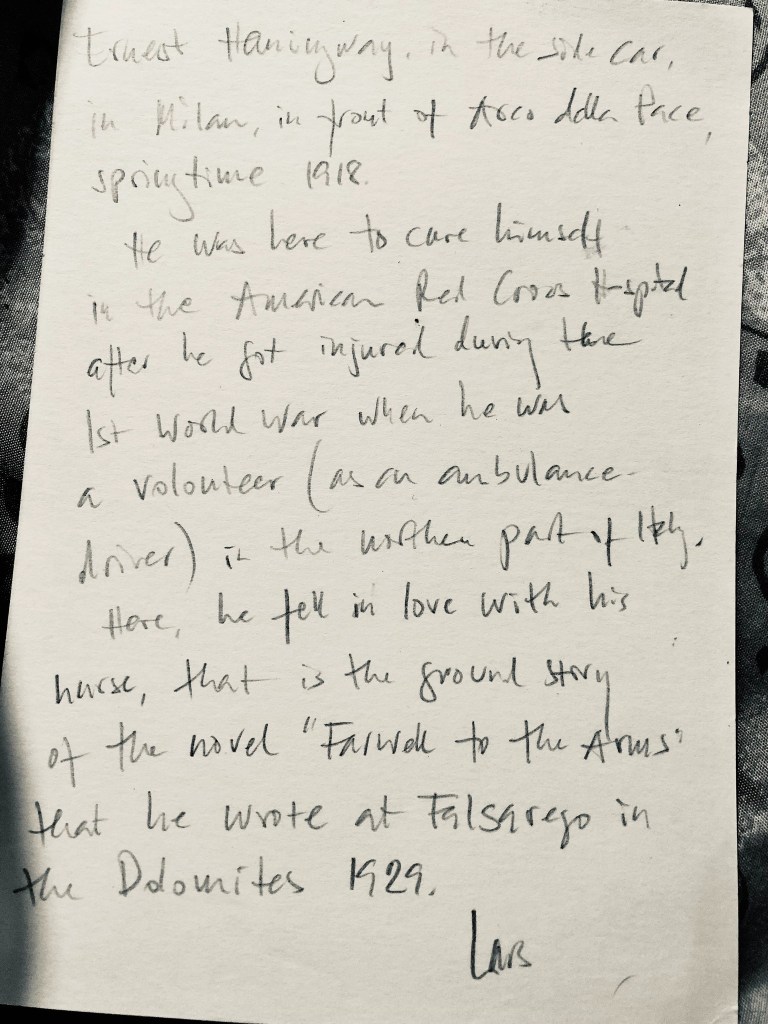




 Hi, I'm Dai and I'm from Vietnam 🚀